




What's Happening?
OpenAI has reduced its target for its latest funding round by $10 billion, now seeking approximately $20 billion, according to the Financial Times. This adjustment comes amid a broader sell-off in tech stocks, driven by concerns surrounding artificial
intelligence investments. The company's desired valuation has also decreased from $1.4 trillion to $1.25 trillion. OpenAI had set a Friday, October 30, 2026, deadline for investors to commit to the funding round, but the 'first close' is anticipated to raise less than the revised $20 billion, as some investors have scaled back their allocations. A consortium of United Arab Emirates investors, including state-backed technology fund MGX, is expected to be the largest participant, with OpenAI potentially gaining access to newly developed computing capacity in the region. Venture capital firms such as Founders Fund, Coatue, Sequoia Capital, and Andreessen Horowitz are also projected to participate.
Why It's Important?
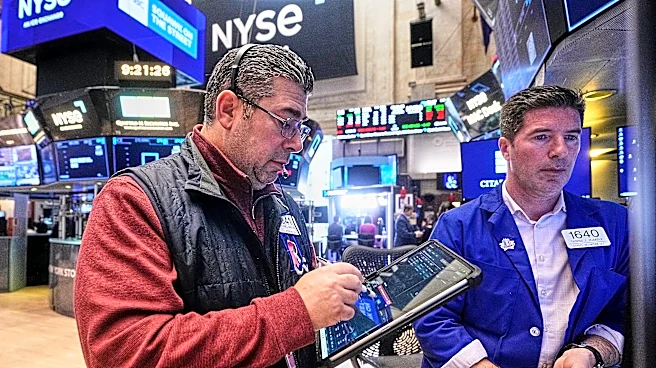
This reduction in OpenAI's funding target and valuation reflects a growing cautiousness within the U.S. tech investment landscape regarding the massive capital flowing into AI. The tech-heavy Nasdaq index experienced a significant drop, indicating broader market anxieties about the return on investment for AI infrastructure. For U.S. businesses and investors, this signals a potential recalibration of expectations for AI companies, moving from rapid, unchecked growth to a more scrutinized and performance-driven investment environment. While OpenAI remains a dominant player, the funding adjustment could influence the valuation and fundraising strategies of other AI startups and established tech companies in the U.S. It also highlights the intense competition within the AI sector, particularly with rivals like Anthropic, which is reportedly planning an imminent IPO. The shift could lead to a more disciplined approach to AI development and commercialization, with a greater emphasis on tangible revenue generation and sustainable business models.
What's Next?
The 'first close' of OpenAI's funding round is expected to fall short of the revised $20 billion target, indicating continued investor caution. Wealthy individuals will reportedly have the option to invest in a subsequent retail offering at the $1.25 trillion valuation. The involvement of the UAE consortium suggests a growing international interest in U.S. AI companies, potentially diversifying funding sources beyond traditional Silicon Valley venture capital. OpenAI, which is reportedly pursuing a listing in 2027, will likely continue to navigate a competitive market, especially with Anthropic's impending IPO. The company's ability to demonstrate fundamental scientific progress, as evidenced by its recent mathematical breakthroughs, may serve as a counterargument to investment skeptics. However, the broader market sentiment regarding AI investments will remain a critical factor, influencing future funding rounds and the overall trajectory of AI companies in the U.S.
Beyond the Headlines
The scaling back of OpenAI's funding target could have deeper implications for the long-term trajectory of AI development. It might signal a shift from a 'growth at all costs' mentality to one that prioritizes profitability and responsible scaling. This could lead to increased scrutiny on the ethical implications and societal impact of AI technologies, as investors demand clearer pathways to sustainable revenue. The competition between OpenAI and Anthropic, particularly in attracting similar investor bases, could intensify the race for AI dominance, potentially leading to accelerated innovation but also raising concerns about market concentration. Furthermore, the reliance on international investors, such as the UAE consortium, could introduce new geopolitical considerations into the U.S. AI landscape, influencing data governance, technology transfer, and national security discussions. This financial recalibration may ultimately shape the regulatory environment for AI, as policymakers respond to both the economic opportunities and potential risks associated with this rapidly evolving technology.