






What's Happening?
Nexstrom, a Singapore-based semiconductor startup, has secured $15 million in funding, including a recent $12 million seed round, to advance its technology for manufacturing two-dimensional (2D) semiconductors. The company aims to address the challenges
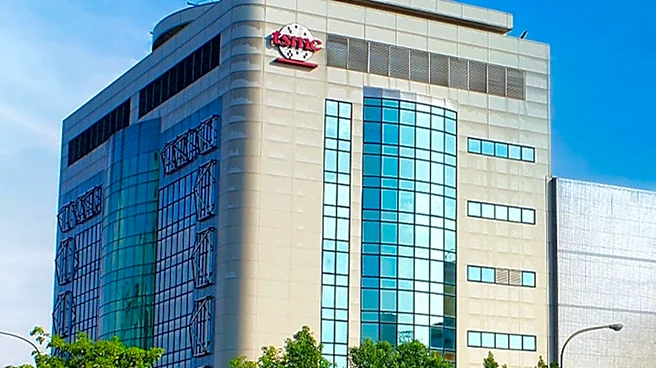
faced by chipmakers in shrinking silicon transistors, such as leakage, power loss, and heat, by utilizing extremely thin materials known as transition-metal dichalcogenides (TMDs). Nexstrom's technology, based on research by co-founder Lance Li, focuses on producing these materials at scale directly on 300mm chip wafers. While 2D materials have been explored in labs, Nexstrom is bridging the gap between small-scale, high-quality production and commercial manufacturing. The startup plans to sell its equipment and collaborate with major chipmaking companies like TSMC, Samsung, and Intel, some of whom are already testing Nexstrom's wafer samples.
Why It's Important?
The development of 2D semiconductors by companies like Nexstrom is crucial for the future of the U.S. technology and electronics industries. As silicon transistors approach their physical limits, the ability to create smaller, more efficient chips is vital for continued innovation in computing, artificial intelligence, and data centers. The global component shortage, exacerbated by demand for data centers, underscores the need for new manufacturing solutions. If Nexstrom succeeds in scaling 2D semiconductor production, it could lead to significant advancements in chip performance, reduced power consumption, and improved thermal management, benefiting U.S. tech companies that rely on cutting-edge processors. This innovation could also help alleviate supply chain pressures and foster greater domestic and international collaboration in semiconductor research and manufacturing.
What's Next?
Nexstrom plans to utilize its recent funding to further develop its technology, move its equipment closer to commercial production, and expand its team. The company is focused on improving process control and measurement capabilities, as well as supporting qualification programs with potential customers. Nexstrom anticipates its equipment will be ready for commercial production between 2030 and 2035. The startup is actively working to consistently grow TMDs across full-size wafers, having already scaled from 2 inches to 6 inches, with plans to complete 8-inch wafer production by the end of October. The success of Nexstrom's efforts could influence the strategies of major U.S. and international chipmakers, potentially leading to wider adoption of 2D materials in transistor integration.
Beyond the Headlines
The pursuit of 2D semiconductors represents a fundamental shift in chip manufacturing, moving beyond the traditional silicon-based paradigm. This technological evolution carries broader implications for the U.S. in terms of national security, economic competitiveness, and scientific leadership. The ability to produce more powerful and energy-efficient chips could enhance U.S. capabilities in advanced computing, defense systems, and emerging technologies. Furthermore, the collaboration between startups like Nexstrom and established industry giants highlights a global effort to overcome technological barriers, fostering an ecosystem of innovation that could redefine the landscape of electronics and semiconductors for decades to come. The ethical considerations around the environmental impact of new manufacturing processes and the potential for increased technological disparities will also become increasingly relevant.