






What's Happening?
The Duane Arnold nuclear power plant near Palo, Iowa, a 615-megawatt boiling water unit, has received a federal loan of up to $1.9 billion from the Energy Department for its restart. This amount is the largest federal check issued for any American reactor
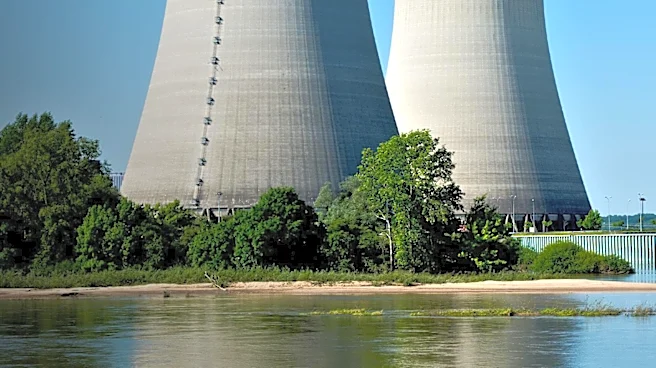
revival, despite Duane Arnold being the smallest reactor among those receiving restart financing. The significant cost is attributed to the extensive dismantling that occurred after its shutdown; its cooling towers, generator output transformer, and transmission lines were removed, and most major systems were drained and de-energized. The plant aims to be back on the grid by early 2029, potentially as early as late 2028. The loan was finalized on September 8, with Deputy Energy Secretary James Danly announcing it as the final piece of financing needed, though the full project cost remains undisclosed by NextEra, the plant's operator.
Why It's Important?
The substantial federal investment in the Duane Arnold restart challenges the perception that reactivating dormant nuclear plants is a consistently cheap method for increasing grid power. The high cost per kilowatt for this project, approximately $3,090, significantly exceeds that of other nuclear restarts like Palisades and Crane, raising questions about the true economic viability and predictability of such endeavors. This development has implications for national energy policy, particularly as the US seeks to bolster grid reliability and transition to cleaner energy sources. If even 'simpler' restarts require such extensive funding due to prior decommissioning, it could necessitate a reevaluation of timelines and ratepayer costs for future nuclear projects. The project also highlights the complex interplay between federal funding, private energy companies, and local community concerns, as Google is purchasing most of the plant's output and plans a nearby data center, which has drawn objections from Palo residents.
What's Next?
The Duane Arnold plant is now an active construction zone, with NextEra targeting a restart no later than the first quarter of 2029. The Nuclear Regulatory Commission (NRC) is expected to issue its licensing decisions before January 2028, which will be a critical milestone. NextEra is also pursuing a 20-year license renewal, as the current license expires in early 2034. The project's economic impact is projected to be substantial for Iowa, particularly Linn County, with an estimated annual impact of $346 million statewide and the creation of over a thousand jobs, many of which are returning to former plant employees. However, local opposition to Google's data center plans near the plant indicates ongoing community engagement and potential challenges.
Beyond the Headlines
The Duane Arnold restart underscores a broader national debate about energy infrastructure, climate goals, and economic development. The significant federal outlay for a plant that underwent substantial decommissioning reveals the hidden costs and complexities of bringing retired nuclear assets back online. This case could serve as a precedent for future nuclear revival projects, influencing how policymakers and investors assess the feasibility and financial requirements of such initiatives. Furthermore, the local community's mixed reactions—appreciation for economic benefits versus concerns over new industrial development—highlight the persistent tension between energy needs and local environmental or lifestyle impacts. The project's success or challenges will likely inform future strategies for nuclear power's role in the US energy landscape.