





What's Happening?
Adidas is currently outperforming Nike in the retail battle surrounding the World Cup, with significant sales growth attributed to the tournament. According to M Science data, Adidas saw a 70% increase in apparel spending in May compared to the previous
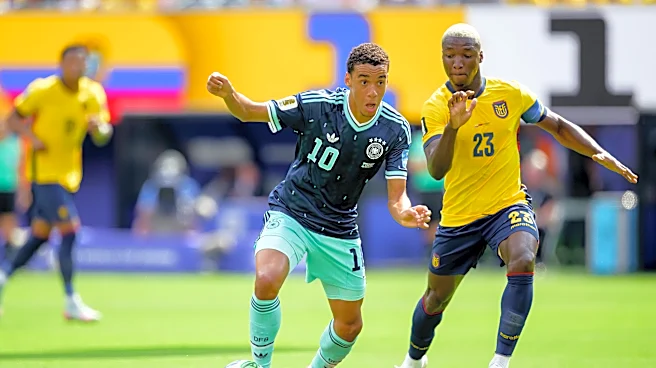
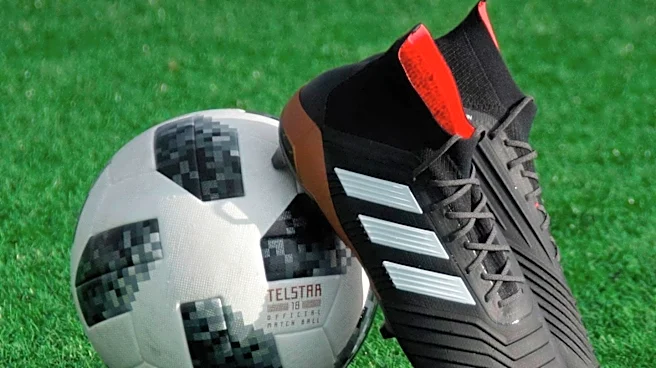
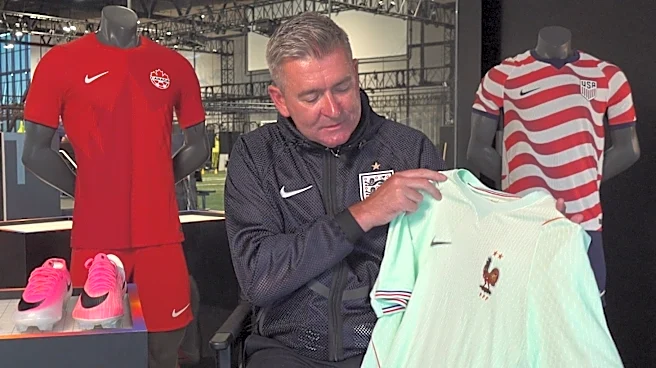
year, driven by strong demand for football shirts. Adidas, the official sponsor of the tournament, supplies the match ball and outfits 14 national teams, while Nike sponsors 12 teams. Despite Nike's efforts to refresh its football ranges globally, Adidas is experiencing a stronger retail momentum. Foot traffic data shows a 47% increase in visits to Adidas' US stores during the first week of the World Cup, compared to an 11% increase for Nike. Nike's US World Cup merchandise has seen strong demand, with 28% selling out in the first two weeks, but Adidas' overall retail performance remains stronger.
Why It's Important?
The competition between Adidas and Nike during the World Cup highlights the significance of major sporting events in driving retail sales and brand visibility. Adidas' success in leveraging the World Cup to boost sales underscores the importance of strategic sponsorships and product offerings in capturing consumer interest. Nike's challenges in maintaining its market share, despite being a larger business, reflect the competitive pressures in the sports apparel industry. The outcome of this retail battle could influence future marketing and sponsorship strategies for both companies. The World Cup serves as a critical platform for brands to engage with consumers and enhance their market positions.
What's Next?
As the World Cup progresses, both Adidas and Nike will continue to capitalize on the event to drive sales and brand engagement. Nike's focus on revitalizing its core sports offerings, including football, will be crucial in its efforts to regain market share. The performance of both companies during the tournament will be closely monitored by investors and industry analysts. Future sponsorship deals and marketing strategies may be influenced by the outcomes of this retail competition. The ability of each brand to convert World Cup enthusiasm into long-term consumer loyalty will be a key factor in their ongoing rivalry.