





What's Happening?
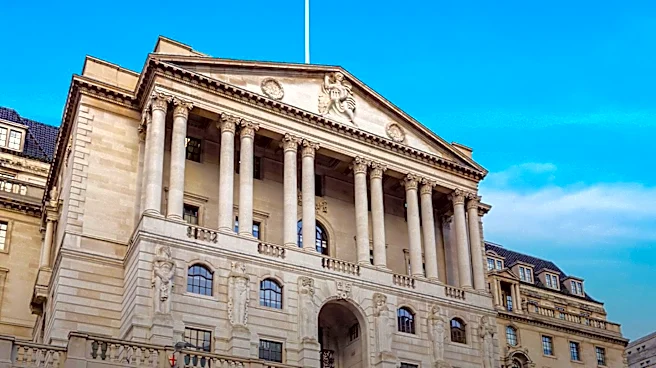
The Bank of England (BoE) recently increased its base interest rate by 0.25% to 4% on November 5, 2026, marking its first rate hike since August 2023. This decision was influenced by a surge in energy prices stemming from the ongoing conflict in the Middle
East, stronger economic activity, and the persistent risk of inflation. Following this rate increase, several mortgage lenders, including Barclays, Nationwide, NatWest, and Santander, have begun cutting prices on their mortgage products. These cuts, primarily on fixed-rate deals, offer a glimmer of optimism for borrowers, as lenders had already factored in the BoE's rate hike into their fixed-rate offerings prior to the announcement. The adjustments by lenders are partly attributed to improved swap rates, which are used to set funding costs.
Why It's Important?
The Bank of England's decision to raise interest rates directly impacts the cost of borrowing across the UK economy. While a rate hike typically leads to higher borrowing costs, the subsequent mortgage price cuts by lenders indicate a complex market dynamic. This development is significant for homeowners and prospective buyers, as it suggests that the immediate impact on mortgage payments might be less severe than initially feared, particularly for those seeking fixed-rate deals. The improved swap rates, which influence lenders' pricing, reflect market expectations and could signal a belief that future rate increases might be less aggressive or that inflation could be brought under control. This situation could help stabilize the housing market, which has been experiencing a slowdown, by making mortgages more accessible or affordable for some borrowers.
What's Next?
Mortgage lenders are expected to continue adjusting their rates, with more price improvements anticipated in the coming days. This could lead to a greater availability of sub-5% fixed-rate deals, especially for borrowers with higher equity or deposits. For individuals looking to remortgage, securing a deal now is advisable, as many lenders allow rates to be locked in months in advance, with the possibility of switching to a cheaper rate if prices fall further. The housing market's response to these changes will be closely monitored, as lower fixed rates could incentivize property hunters and potentially stimulate activity. However, the broader economic outlook, including the persistence of inflationary pressures and global energy prices, will continue to influence both the BoE's future decisions and the mortgage market's trajectory.
Beyond the Headlines
The interplay between the Bank of England's monetary policy and the mortgage market highlights the intricate mechanisms through which central bank decisions ripple through the economy. The fact that mortgage lenders are cutting prices shortly after a rate hike suggests that market expectations and competitive pressures can sometimes mitigate the direct impact of central bank actions. This scenario also underscores the importance of swap rates as a forward-looking indicator for lenders, reflecting their assessment of future interest rate movements and economic conditions. The human dimension of these decisions is profound, as mortgage rates directly affect household budgets and financial stability. The current situation offers a nuanced view of how financial institutions adapt to policy changes, seeking to balance profitability with market demand and borrower affordability.