




What's Happening?
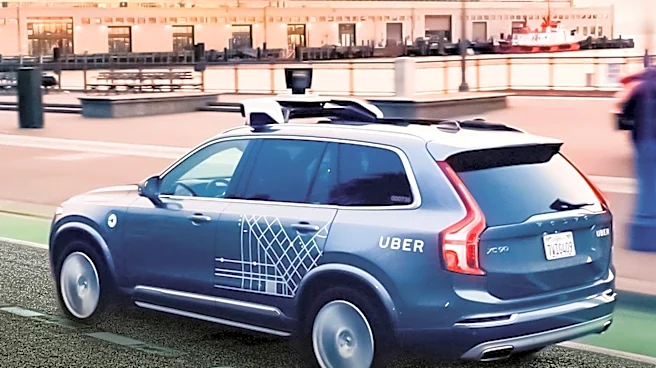
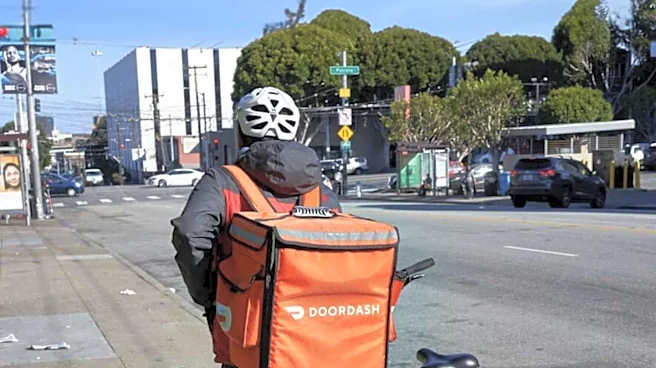
Uber Technologies Inc. and DoorDash Inc. have reported very limited traction for third-party artificial intelligence (AI) agents in generating customer orders and rides. During Uber's third-quarter earnings call, CFO Balaji Krishnamurthy stated that AI agents generated
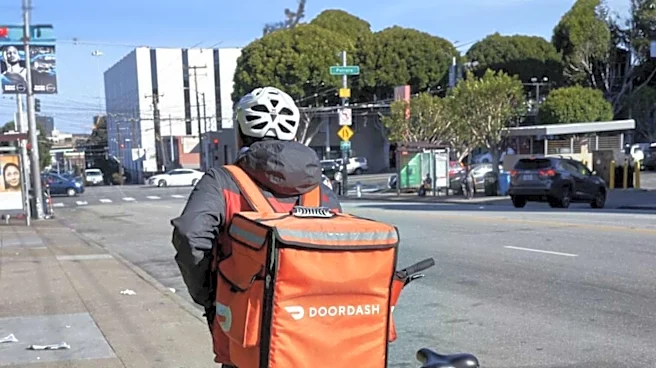
only about 500 Uber Eats orders and four rides during Halloween week, a minuscule fraction compared to the approximately 320 million weekly transactions across Uber's platforms. Similarly, DoorDash CEO Tony Xu revealed that third-party AI agents had cumulatively generated only "several hundred orders" since their inception. Both executives emphasized that customers overwhelmingly prefer to order directly through their respective platforms, indicating that AI agents have not yet significantly penetrated consumer services in the ride-sharing and food delivery sectors.
Why It's Important?
The minimal adoption of AI agents by Uber and DoorDash highlights a significant gap between the perceived potential of AI in consumer services and its current real-world impact. Despite widespread industry buzz about AI's transformative capabilities, these reports suggest that consumers are not yet widely embracing AI-driven interfaces for essential services like food delivery and transportation. This could influence investment strategies in AI development, prompting companies to re-evaluate their approaches to integrating AI into customer-facing operations. For the broader tech industry, it serves as a cautionary tale that technological advancement does not automatically translate into immediate consumer adoption, underscoring the importance of user experience and trust in new technologies. Companies might need to focus more on direct platform enhancements rather than relying heavily on third-party AI intermediaries.
What's Next?
Both Uber and DoorDash are likely to continue exploring AI integration, but with a more cautious and strategic approach. Uber CEO Dara Khosrowshahi indicated that the company is negotiating terms with outside AI providers while also developing proprietary AI assistants, such as its Cart Assistant, which has shown promise in increasing order sizes. This suggests a dual strategy: maintaining direct customer relationships while selectively leveraging AI for internal efficiencies or specific customer enhancements. The focus may shift from broad third-party AI agent adoption to more targeted AI applications that directly improve the core user experience or operational efficiency. Future developments will likely involve refining AI to better understand and meet customer needs, potentially through more personalized services or streamlined ordering processes within their own apps.
Beyond the Headlines
The limited success of third-party AI agents in the gig economy raises deeper questions about consumer behavior, trust in automation, and the future of digital marketplaces. Consumers' preference for direct interaction with established platforms suggests a strong reliance on familiar interfaces and brand loyalty, potentially indicating a resistance to delegating purchasing decisions to autonomous AI. This could have long-term implications for how AI is integrated into daily life, suggesting that AI might be more readily accepted as a background tool for optimization rather than a primary interface for transactions. It also highlights the challenge of building AI systems that can genuinely replicate or surpass the human-centric experience of direct platform engagement, pushing developers to consider the psychological and social aspects of AI adoption beyond mere technological capability.