




What's Happening?
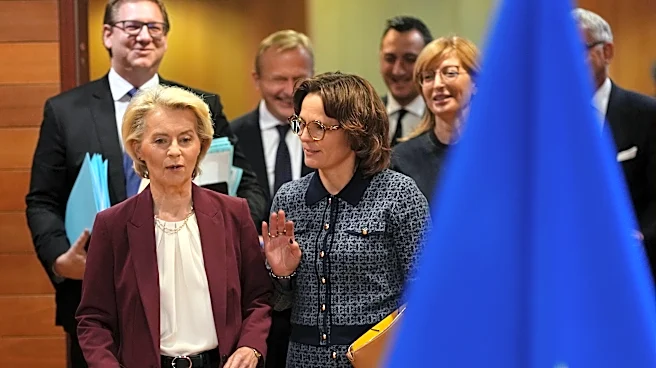
The European Commission has introduced a new EU Sustainable Tourism Strategy aimed at enhancing the sector's competitiveness, sustainability, and resilience. This strategy is designed to support businesses, particularly small and medium-sized enterprises
(SMEs), in developing skills and accessing digital tools and data for innovation and sustainable growth. It also seeks to reduce administrative barriers. Key initiatives include the establishment of an EU Tourism Academy, an EU Tourism Observatory, a Common European Tourism Data Space, and an EU simplification initiative on tourism. The strategy will also work towards creating a seamless European travel area. Tourism is a vital component of Europe's economy, contributing 10% to the EU's Gross Value Added, supporting over 20 million jobs, and encompassing 5 million businesses, with 99% being SMEs. The sector faces challenges such as geopolitical uncertainty, skills shortages, climate change impacts, and evolving traveler expectations, yet European travel intent remains strong, with 76% planning a trip in the next six months.
Why It's Important?
This new strategy is crucial for the European tourism sector, which is a significant economic and social engine. By focusing on competitiveness and resilience, the EU aims to maintain its position as the world's leading tourism destination. The emphasis on supporting SMEs through skills development and digital tools is particularly important, as these businesses form the backbone of the industry. Addressing challenges like geopolitical uncertainty and climate change impacts through a coordinated EU-wide approach can help stabilize and future-proof the sector. The strategy's goal of fostering balanced tourism offers and improving traveler experiences will likely lead to more sustainable practices and better resource management, benefiting both local communities and the environment. Furthermore, by promoting stronger international cooperation and enhancing Europe's global appeal, the strategy could attract more international visitors, boosting economic activity across member states.
What's Next?
To implement the new strategy, a new EU Tourism Alliance will be formed, bringing together national, regional, and local authorities, tourism businesses, and stakeholders. The European Commission will continue to provide support for tourism-related actions through relevant EU programs and funding instruments. Flagship actions, such as the EU Tourism Academy and the EU Tourism Observatory, are expected to be developed and rolled out. The strategy also includes plans for an EU Model for Tourism Management, a Council recommendation, a Toolbox for Balanced Tourism, and an EU Tourism Crisis Coordination Network to help destinations manage visitor flows, encourage year-round travel, and improve crisis preparedness. Additionally, new European Capitals of Tourism Awards will be introduced to amplify the visibility of European destinations and their unique attractions.
Beyond the Headlines
The strategy's focus on sustainability and resilience reflects a broader global shift towards more responsible tourism. By integrating digital transformation and addressing climate change, the EU is positioning its tourism sector to adapt to future challenges and changing consumer values. The emphasis on reducing administrative barriers and fostering a seamless European travel area could enhance efficiency and convenience for both businesses and travelers, potentially setting a precedent for other regions. The initiative also highlights the recognition that tourism is not just an economic activity but also a cultural and social force, cultivating culture and shaping Europe's global influence. This holistic approach suggests a long-term vision for tourism that balances economic growth with environmental protection and social well-being.