






What's Happening?
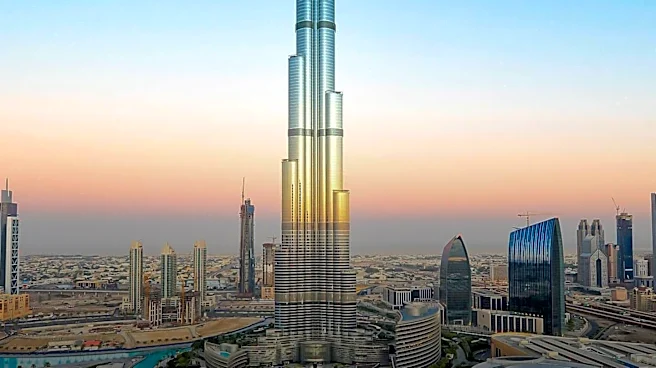
Adrian Smith, an architect from the firm Skidmore, Owings & Merrill (SOM), was the key design architect for the Burj Khalifa, the world's tallest building located in Dubai. The Burj Khalifa, standing at 828 meters, was developed by Emaar Properties. Construction
began with excavation in January 2004, and the main structure started rising in 2005. The tower topped out in January 2009 and was officially inaugurated on January 4, 2010. The building features 200 floors, with 160 being usable, and a total construction area of approximately 527,000 square meters, integrating functions such as hotels, apartments, offices, and observation decks.
Why It's Important?
Adrian Smith's role as the key design architect for the Burj Khalifa highlights the significant contributions of American architectural and engineering expertise to global landmark projects. SOM, a U.S.-based firm, demonstrated its capacity for innovation and problem-solving in designing a structure of unprecedented scale and complexity. This project pushed the boundaries of engineering, particularly in areas like foundation design, wind resistance, material science, and vertical logistics, setting new benchmarks for supertall building construction worldwide. The Burj Khalifa's success has cemented Dubai's status as a global hub and a symbol of modern architectural ambition, influencing urban development and design philosophies internationally. It also showcases the economic and technological prowess required to undertake such monumental endeavors, often involving international collaboration and cutting-edge techniques.
What's Next?
The Burj Khalifa continues to stand as a testament to Adrian Smith's and SOM's architectural vision and engineering capabilities. The lessons learned from its design and construction, particularly regarding wind resistance, high-strength concrete pumping, and vertical transportation, continue to inform the development of new supertall structures globally. Architects and engineers worldwide study the Burj Khalifa's innovative solutions to address challenges in future projects. Adrian Smith's work on the Burj Khalifa has also influenced his subsequent projects and the broader field of skyscraper design, contributing to ongoing advancements in structural efficiency and aesthetic integration in high-rise buildings.
Beyond the Headlines
The Burj Khalifa is more than just a tall building; it is a symbol of human ingenuity and ambition, reflecting a desire to transcend conventional limits. Its design, particularly the Y-shaped plan and stepped setbacks, was not merely aesthetic but a sophisticated engineering solution to mitigate wind forces, demonstrating the intricate relationship between form and function in architecture. The project also raised significant questions about sustainable urban development, resource management, and the social impact of mega-structures in rapidly growing cities. The challenges overcome during its construction, such as pumping concrete to extreme heights and managing a massive workforce in harsh climatic conditions, represent milestones in construction technology. The Burj Khalifa's legacy extends to inspiring future generations of architects and engineers to tackle even more ambitious projects, continually redefining what is possible in the built environment.