


What's Happening?
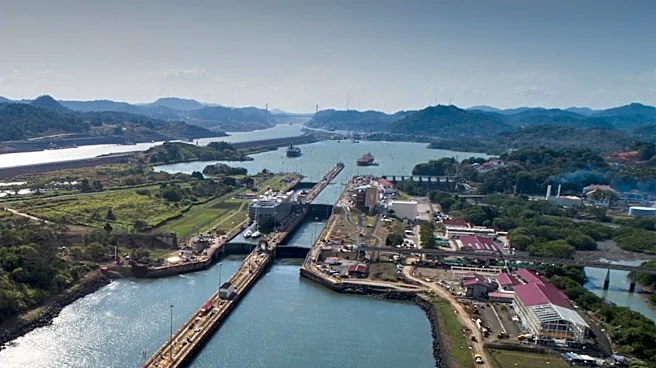
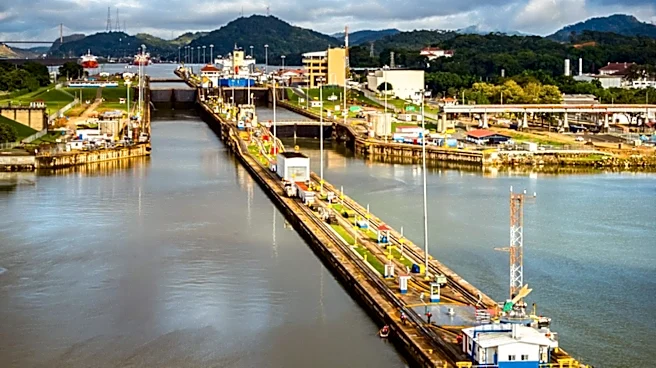
The Panama Canal Authority is implementing further reductions in daily ship transits due to severe water shortages caused by the El Niño weather phenomenon. This marks a second round of cutbacks, with maritime traffic already reduced to 32 ships daily in early
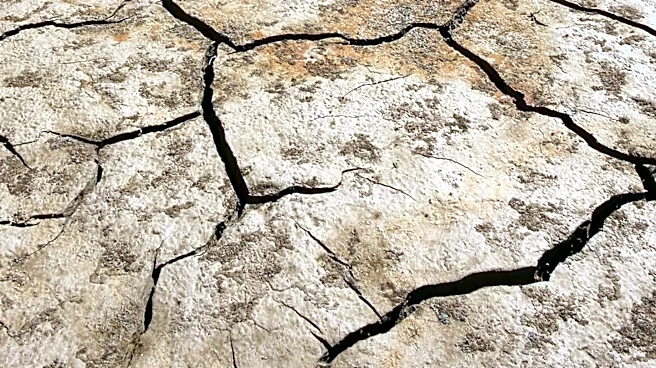
September. A further reduction to only 29 transits daily is set to go into effect next month. These measures are a direct response to drought-like conditions affecting the Caribbean and Central America, leading to vastly reduced rainfall levels that are critical for the canal's operation. The Caribbean Private Sector Organization (CPSO) has issued warnings to regional importers about the potential implications of these cutbacks, including price hikes and commodity shortages. The canal, a vital waterway connecting the Pacific and Atlantic oceans, is experiencing unprecedented operational challenges due to environmental factors.
Why It's Important?
The ongoing traffic reductions through the Panama Canal carry significant economic implications for the U.S. and the broader global trade landscape. The Caribbean region, in particular, is heavily reliant on the canal, with up to $10 billion in regional imports, approximately one-third of non-fuel imports, transiting through it. The CPSO has highlighted that the cost signals are already visible, with a priority auction slot recently fetching a record $5.3 million. These increased costs, including auction premiums and low-water surcharges, are passed down the supply chain to importers, distributors, and ultimately to consumers. For the U.S., this could translate to higher prices for goods imported from or through the Caribbean, and potential delays in supply chains. Furthermore, the rerouting or rationalization of port calls by carriers due to slot scarcity means smaller markets, including those with strong trade ties to the U.S., are likely to experience reduced frequency of shipments, impacting inventory levels and increasing lead times. This situation underscores the vulnerability of global trade to climate-related disruptions and highlights the need for resilient supply chain strategies.
What's Next?
The immediate future will likely see continued adjustments to shipping schedules and increased costs for goods transiting the Panama Canal. The announced further reduction to 29 daily transits will exacerbate existing pressures on supply chains and could lead to more significant price increases and potential commodity shortages in the Caribbean region, which will inevitably affect U.S. consumers and businesses. Stakeholders, including regional importers and international shipping companies, will need to adapt to these new operational realities, potentially exploring alternative shipping routes or modes of transport, though these often come with higher costs and longer transit times. The situation also prompts a broader discussion on long-term solutions for the canal's water management, especially given the increasing frequency and intensity of extreme weather events linked to climate change. Monitoring rainfall levels and the El Niño phenomenon will be crucial in determining when, or if, normal transit levels can resume.
Beyond the Headlines
The challenges faced by the Panama Canal extend beyond immediate economic impacts, touching upon critical issues of climate resilience and global infrastructure vulnerability. The reliance of a major global trade artery on natural water levels highlights the profound influence of climate change on international commerce. This situation could accelerate investments in climate adaptation strategies for critical infrastructure worldwide, prompting a re-evaluation of supply chain dependencies and the development of more diversified logistics networks. Ethically, the passing of increased costs to consumers, particularly in smaller, more vulnerable economies, raises questions about equitable burden-sharing in the face of climate-induced disruptions. The event also underscores the interconnectedness of global systems, where a localized environmental phenomenon can trigger a cascade of economic and social consequences across continents, influencing everything from consumer prices to geopolitical trade strategies. It serves as a stark reminder that the stability of global trade is increasingly intertwined with environmental stability.