
What's Happening?
The Hollywood Investor Calendar for 2026-2027 details significant events for independent film investors, spanning from international film festivals to major awards ceremonies and film markets. The awards season
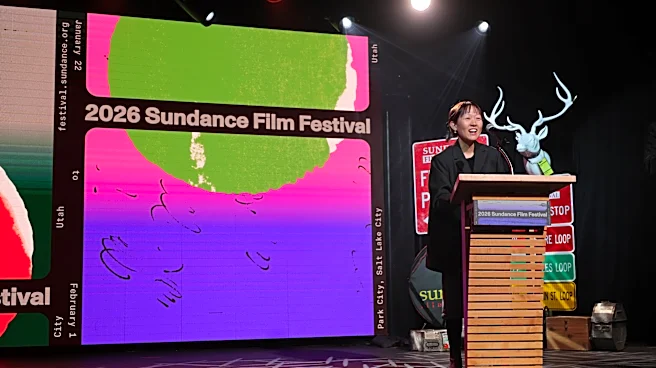
kicks off in September with the Venice, Telluride, and Toronto film festivals, which are crucial for establishing early buzz around compelling movies. These festivals offer independent film investors a preliminary look at critical and audience reception, as well as potential buyer interest. Key dates include the American Film Market (November 10–15, 2026), Gotham Film Awards (November 30, 2026), and various nominations for the Independent Spirit Awards, Critics Choice Awards, Golden Globes, and Oscars throughout December 2026 and January 2027. The Sundance Film Festival is scheduled for January 21–31, 2027, in Boulder, Colorado, followed by the European Film Market in Berlin in February 2027. The calendar culminates with the Film Independent Spirit Awards on March 6, 2027, and the 99th Academy Awards on March 14, 2027. Post-Oscars, the Marché du Film and Cannes Film Festival are set for May 2027, and the Tribeca Festival in June 2027, highlighting ongoing business and creative opportunities.
Why It's Important?
This calendar is vital for independent film investors as it maps out the annual cycle of opportunities and critical junctures in the entertainment industry. For investors, these events are not merely glamorous showcases but strategic platforms to assess the commercial viability and artistic merit of their investments. Film festivals provide early feedback from critics and audiences, which can influence distribution deals and awards campaigns. Film markets like the American Film Market and Marché du Film are essential for negotiating rights, securing financing, and exploring sales opportunities, often before a film is even completed. Understanding this timeline helps investors navigate the complex financial landscape of independent cinema, where profitability depends on factors beyond critical acclaim, such as distribution agreements, marketing expenses, and revenue waterfalls. The calendar also underscores the global nature of film finance, with significant markets and festivals taking place internationally, offering diverse avenues for investment returns and networking.
What's Next?
Following the outlined calendar, independent film investors will continue to engage in a year-round cycle of project development, production, and financing. After the awards season concludes in March 2027, attention will shift to the financial realities of their investments, including revenue collection, outstanding expenses, and available distribution rights. The Cannes Film Festival and Marché du Film in May 2027 will serve as critical venues for international deal-making, where producers seek financing and sales agents negotiate rights for new projects. The Tribeca Festival in June 2027 will offer opportunities to explore broader entertainment ventures beyond traditional film, including partnerships with consumer brands and technology companies. Investors will also use the summer months to review past investments and prepare for the next fall festival circuit, evaluating potential new projects based on producer track records, financial reporting, and distribution relationships. This continuous cycle emphasizes the long-term engagement required in independent film investment.
Beyond the Headlines
The Hollywood Investor Calendar reveals the intricate balance between artistic endeavor and commercial enterprise in the film industry. Beyond the glitz of premieres and awards, the calendar highlights the underlying business mechanisms that drive independent cinema. It underscores that a film's commercial value is often distinct from its production cost or critical reception, with complex 'revenue waterfalls' determining how earnings are distributed among stakeholders. The calendar also points to the experiential and social benefits for investors, offering access to exclusive events and a new professional community, which can sometimes lead to opportunities outside of film. This dual nature of film investment—combining financial risk with cultural engagement and networking—shapes a unique investment landscape. The emphasis on international markets further illustrates that the 'Hollywood' industry is a global network, with significant financial decisions and collaborations occurring worldwide, often away from public view.