


What's Happening?
Walmart is undertaking a significant fashion makeover to shed its 'uncool' reputation and attract more discerning shoppers, including families earning over $100,000 annually. Denise Incandela, head of the Walmart U.S. fashion team, has been leading this
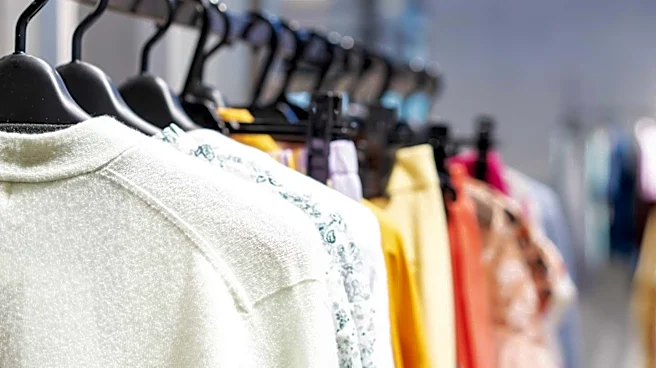
initiative since 2017, investing heavily in design talent and launching or redesigning 15 in-house lines, such as Free Assembly and Scoop. The company has also brought in over 1,500 outside brands. Walmart is hiring designers from reputable fashion brands, offering competitive salaries and stock options, and has established a New York office with 165 employees. The strategy focuses on offering quality, stylish clothing at everyday low prices, aiming to compete with fast-fashion retailers like Shein and Amazon, as well as traditional department stores. This effort includes collaborations with high-profile creative directors like Brandon Maxwell, who oversees Free Assembly and Scoop, and a focus on creating durable, well-designed pieces.
Why It's Important?
Walmart's fashion transformation is a critical response to a bifurcated economy where luxury brands cater to top spenders, while other consumers face rising costs and declining quality in mid-tier fashion. By offering stylish, quality apparel at accessible price points, Walmart aims to capture a broader market segment that is increasingly value-conscious but still desires fashionable options. This move could significantly disrupt the retail landscape, challenging both fast-fashion giants and traditional department stores that are struggling to adapt. If successful, Walmart could become a dominant force in the affordable fashion sector, leveraging its massive scale and supply chain efficiencies to offer prices that competitors cannot match. This strategy also reflects a broader trend of mass-market retailers investing in design talent to elevate their offerings and appeal to a more fashion-savvy consumer base.
What's Next?
Walmart will continue to refine its fashion strategy, focusing on expanding its in-house brands and attracting more external labels. The company's investment in design talent and its New York fashion office suggests a long-term commitment to this transformation. Walmart will likely continue to leverage its 'everyday low prices' mantra to attract new customers, while simultaneously working to improve its online shopping experience, which currently faces challenges with third-party sellers. The success of this initiative will depend on whether Walmart can consistently deliver on its promise of quality and style, and effectively change consumer perceptions. The company may also explore further collaborations with high-profile designers and influencers to generate buzz and solidify its new fashion identity. The outcome of this transformation could set a new standard for how large retailers approach fashion in an evolving economic climate.
Beyond the Headlines
Walmart's fashion makeover has deeper implications for consumer culture and the retail industry's future. It challenges the long-held perception of 'cool' and 'uncool' in fashion, suggesting that affordability and accessibility can coexist with style and quality. This shift could democratize fashion, making well-designed clothing available to a wider demographic. Ethically, Walmart's emphasis on creating durable clothes that consumers 'want to keep' could subtly push back against the environmental impact of fast fashion, even if its core business model remains high-volume. The company's ability to attract designers from 'better' brands also highlights the instability of the traditional fashion industry, where stable employment at a mass retailer can be more appealing than the volatility of high fashion. This could lead to a re-evaluation of career paths and creative opportunities within the fashion ecosystem.