




What's Happening?
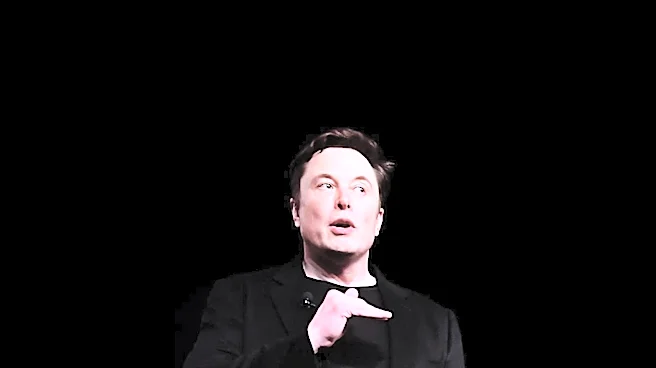
Elon Musk has issued a warning regarding a potentially severe funding shortage in the AI sector next year, citing extreme difficulties in deploying AI compute at scale. This statement came in response to François Chollet, founder of the deep learning
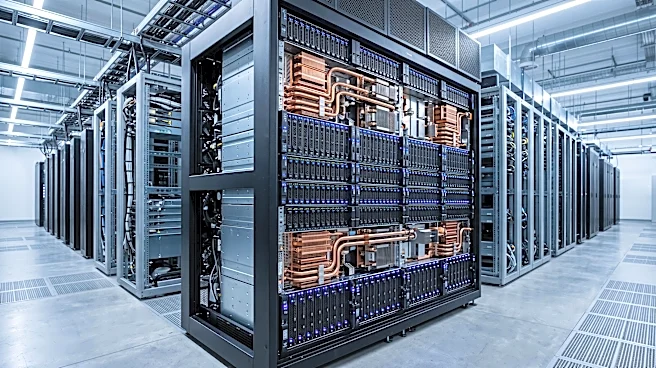
open-source project Keras, who suggested that AI compute demand is far from peaking and that the current market pullback might present a buying opportunity. Musk countered that operationalizing large-scale compute investments, including cooling and maintaining stability, is exceptionally challenging. He highlighted a significant delay of several months between paying for compute resources and those resources becoming stable, operational, and revenue-generating. This delay, even if cumulative across the industry, could necessitate hundreds of billions of dollars in additional working capital, raising questions about its availability.
Why It's Important?
Musk's warning underscores a critical financial and operational bottleneck within the rapidly expanding artificial intelligence industry. The potential for a severe funding shortage could significantly impact the pace of AI development and deployment in the U.S. and globally. Companies heavily invested in AI infrastructure, particularly those reliant on large-scale compute, could face substantial financial strain if working capital becomes scarce. This situation could lead to project delays, reduced innovation, and even consolidation within the AI sector, as smaller players might struggle to secure necessary funding. The debate between Musk and Chollet highlights differing perspectives on the AI market's trajectory, with Musk emphasizing the practical challenges and financial risks, while Chollet points to underlying demand, suggesting a potential market opportunity for those who can navigate these challenges.
What's Next?
The AI industry will likely face increased scrutiny regarding its financial models and operational efficiencies in the coming months. Companies and investors will need to carefully assess the timelines for compute deployment and revenue generation to mitigate the risks of funding shortfalls. This could lead to a more cautious investment environment, with a greater emphasis on proven operational capabilities and clearer paths to profitability. Furthermore, the discussion may prompt a re-evaluation of supply chain dynamics for AI hardware and infrastructure, as delays in these areas directly contribute to the working capital requirements. The industry might also see a push for more efficient compute utilization and alternative funding mechanisms to bridge the gap between investment and operational returns.
Beyond the Headlines
Musk's concerns extend beyond mere financial projections, touching upon the fundamental complexities of scaling advanced technological infrastructure. The 'delay of several months' between investment and operational readiness for AI compute reveals a deeper challenge in translating theoretical AI advancements into practical, revenue-generating applications. This gap could expose vulnerabilities in the current venture capital model for AI, which often prioritizes rapid growth over long-term operational sustainability. It also raises questions about the environmental impact of large-scale AI compute, particularly regarding energy consumption for cooling, which adds another layer of operational complexity and cost. The debate could signal a shift towards more sustainable and efficient AI development practices, potentially favoring companies that can demonstrate both technological prowess and robust operational management.