







What's Happening?
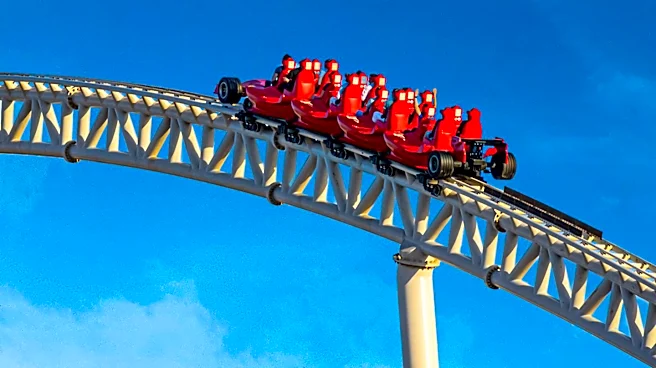
Universal Studios Hollywood has launched its new high-speed roller coaster, Fast & Furious: Hollywood Drift, in an unexpected soft opening. The ride, which has been in development for a decade, is touted as one of the most intense in Universal's global
portfolio. It features vehicles that can rotate 360 degrees and reach speeds of up to 72 mph, offering multiple inversions. Currently, the coaster is in 'technical rehearsals,' meaning it is not guaranteed to be operational at all times as it undergoes final testing. The ride is situated on a steep hill between the park's upper and lower lots, adding to its dynamic nature. Despite the excitement, the coaster has drawn some complaints from nearby residents due to noise during test runs.
Why It's Important?
The opening of Fast & Furious: Hollywood Drift is significant as it represents a major addition to Universal Studios Hollywood's attractions, potentially boosting visitor numbers and enhancing the park's competitive edge in the theme park industry. The ride's innovative design and high-speed thrills are likely to attract thrill-seekers and fans of the Fast & Furious franchise, contributing to increased revenue and tourism in the area. However, the noise complaints from local residents highlight the ongoing challenge theme parks face in balancing expansion with community relations. The ride's success could influence future developments and investments in theme park attractions across the U.S.
What's Next?
Universal Studios Hollywood is expected to announce a formal grand opening for the Fast & Furious: Hollywood Drift coaster soon. This will likely include a gala event to officially introduce the ride to the public. In the meantime, the park will continue to conduct technical rehearsals to ensure the ride operates smoothly. The park's management may also engage with the local community to address noise concerns and find a resolution that satisfies both the park's operational needs and the residents' quality of life. The outcome of these discussions could set a precedent for how theme parks handle similar issues in the future.