








What's Happening?
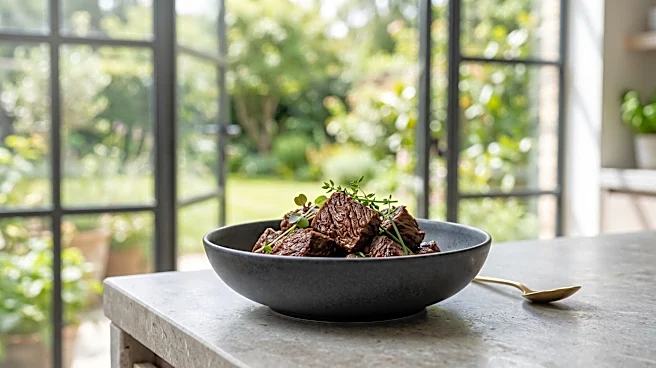
Researchers in South Korea, led by Professor Ju Seon-tae of Gyeongsang National University, claim to have achieved a 70 to 80 percent reduction in the production cost of a cultivated steak. This breakthrough involves combining cultured animal muscle cells
with plant-based proteins from peas, soy, and wheat. The mixture is spun into thread-like fibers, which are then bundled to create a three-dimensional cut designed to mimic sirloin and tenderloin. A coating of vegetable oils and beef tallow is applied to provide fat and marbling. The team attributes a significant portion of these cost savings to the reuse of scaffolds in the cell culture process, rather than discarding them after single use. This project, funded by Korea’s agriculture ministry and its food technology agency, IPET, aims to produce a product that could potentially sell for approximately ₩40,000 per kilogram, which is about half the price of grade-one Hanwoo sirloin. The product is termed a 'hybrid' because it integrates plant proteins to form the structural frame, with cultured cells built into this framework.
Why It's Important?
This development is significant for the cultivated meat industry, which has faced substantial challenges in achieving cost parity with traditional meat products, particularly for whole-cut alternatives. The high production costs, largely due to expensive growth media and single-use bioreactor components, have been a major barrier to commercial viability and widespread consumer adoption. By significantly reducing costs, this South Korean research could accelerate the market entry and competitiveness of cultivated meat products. The hybrid approach, utilizing plant proteins as a scaffold, addresses the complex architectural challenge of replicating real meat tissue, which typically relies on intricate blood vessel networks for nutrient delivery. If successfully commercialized, this could make cultivated meat more accessible to consumers, potentially impacting global food supply chains, reducing the environmental footprint associated with traditional livestock farming, and offering new options for sustainable protein consumption. The focus on whole-cut products is crucial, as most existing cultivated meat products are minced or blended, making a steak-like product a more appealing and direct competitor to conventional meat.
What's Next?
The research team's claims, while promising, have not yet been published in a peer-reviewed paper, meaning independent verification is pending. Key details, such as the exact proportion of animal cells in the hybrid product, the species from which the cells are derived, and the baseline against which the 80 percent cost saving is measured, remain undisclosed. Before commercial sale, the product will require approval from Korea’s Ministry of Food and Drug Safety. A startup, Orange Cow, has been spun out of the lab and is currently developing the product for market. Future steps will likely involve rigorous testing for texture, taste, and nutritional profile, as well as scaling up production to meet commercial demands. The industry will be watching for tasting results and further data to substantiate the claims of cost reduction and product quality. The success of this hybrid model could also influence research directions in other cultivated meat companies, potentially leading to more hybrid products that blend plant-based and cell-cultured components to achieve cost-effectiveness and desired textures.
Beyond the Headlines
The emergence of hybrid cultivated meat products raises important questions regarding consumer perception, labeling, and regulatory frameworks. Consumers will need clear labeling to understand the composition of these hybrid products, distinguishing them from purely cell-cultured or purely plant-based alternatives. The term 'hybrid' itself may require standardization to ensure transparency. Ethically, the integration of plant proteins might broaden the appeal of cultivated meat to a wider range of consumers, including those who are hesitant about fully lab-grown products but are open to a blend. Legally, regulatory bodies will need to establish guidelines for these novel hybrid foods, considering aspects like ingredient sourcing, processing methods, and safety assessments for both the animal cell and plant protein components. This innovation could also spark a broader trend in the food industry towards blended products that leverage the strengths of different food technologies to create sustainable, affordable, and palatable alternatives to conventional animal products, potentially reshaping dietary habits and food production systems globally.