







What's Happening?
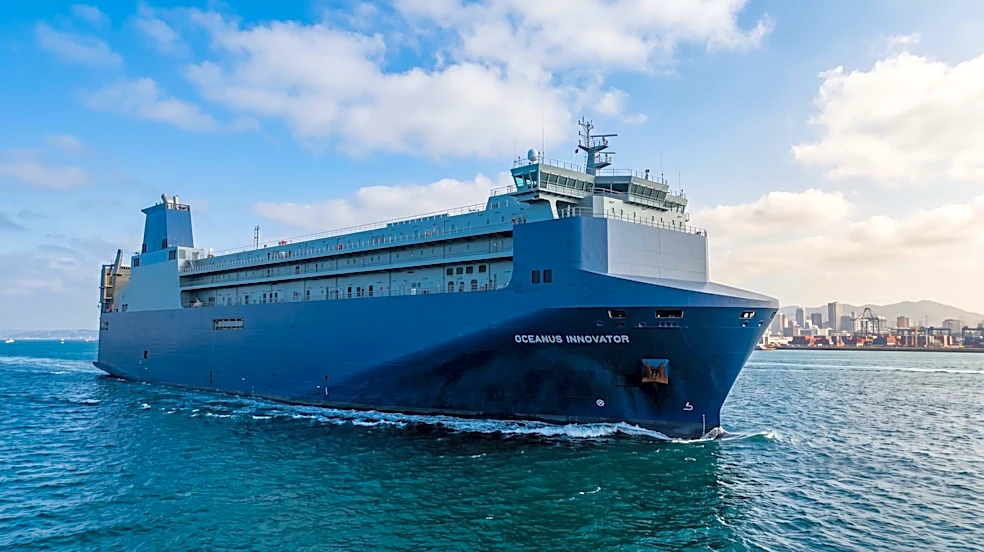
Hyundai Glovis and U.S.-based Liberty Global Logistics have signed a Memorandum of Understanding (MOU) to evaluate the feasibility of operating pure car and truck carriers powered by small modular reactors (SMRs). The initial focus of this study is on
potential service between South Korea and the United States, with regulatory feasibility work concentrating on U.S. West Coast ports. This initiative aims to address the shipping industry's pressure to reduce greenhouse gas emissions and navigate uncertain fuel costs. While Hyundai Glovis previously received Approval in Principle from Lloyd's Register for its nuclear-powered car carrier concept, this is a design-review milestone and not a permit for construction or operation. The companies will examine commercial viability, regulatory approvals, vessel construction, port access, and operational requirements. The project acknowledges that nuclear propulsion offers a theoretical advantage of extended travel without conventional fuel bunkering or carbon emissions, which could benefit long-range vehicle carriers by reducing fuel dependence and supply constraints.
Why It's Important?
This exploration into nuclear-powered car carriers holds significant implications for the U.S. maritime industry and global supply chains. If successful, it could revolutionize how vehicles are transported, offering a pathway to significantly reduce carbon emissions in a sector heavily reliant on fossil fuels. The initiative could also influence U.S. port infrastructure development, as ports would need to assess berth access, emergency planning, security, and environmental processes to accommodate such vessels. For U.S. automotive logistics, a reliable, low-emission shipping option could enhance supply chain resilience and meet growing environmental mandates. However, the project faces substantial challenges, including the high costs associated with reactor procurement, safety systems, specialized crews, and decommissioning. The success of this venture could position the U.S. as a leader in sustainable maritime transport, but failure to address the complex regulatory and operational hurdles could deter future innovations in nuclear-powered shipping.
What's Next?
The immediate next steps involve Liberty Global Logistics evaluating the U.S. regulatory and operational environment, particularly focusing on West Coast ports, while Hyundai Glovis assesses corresponding Korean requirements. This critical phase will determine the practicalities of port access, which is arguably more consequential than the propulsion technology itself. The companies will also study potential shipyards and vessel classification requirements. A credible business case will need to compare the full lifecycle cost and operating reliability of nuclear propulsion against alternative-fuel and conventional designs. This will include assessing vessel payload, construction lead times, financing, crew requirements, emergency response, port charges, insurability, and end-of-life liabilities. The initiative is currently in the serious exploration phase, and a commercial deployment commitment or service launch date has not been established. Future announcements are expected to provide evidence of a workable regulatory route, realistic port access, and an economically credible operating model.
Beyond the Headlines
The move towards nuclear-powered shipping introduces profound ethical, legal, and cultural dimensions. Public perception and acceptance of nuclear technology in commercial shipping, especially concerning safety and potential environmental risks, will be crucial. The legal framework for liability in case of an incident, both domestically and internationally, will need significant development or adaptation. Culturally, there may be resistance from port communities and environmental groups due to concerns about radiation and security. This initiative also highlights a long-term shift in supply chain dependencies, moving from reliance on conventional fuel bunkering to a new ecosystem involving reactor manufacturing, specialized components, nuclear fuel stewardship, and long-term maintenance. The success of this project could set a precedent for other sectors of the maritime industry, potentially accelerating the adoption of advanced propulsion systems and reshaping global trade routes based on energy efficiency and environmental sustainability.