





What's Happening?
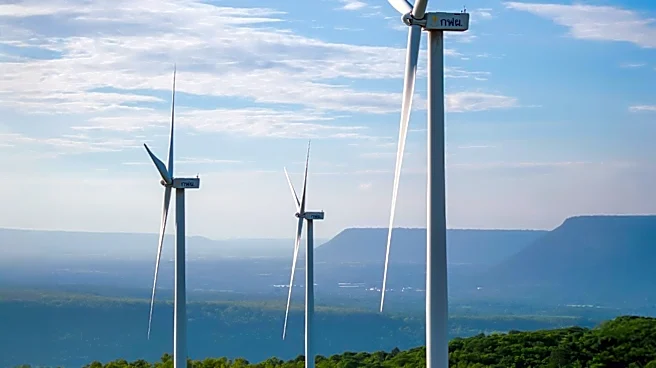
Maine regulators have chosen Clearway Energy to construct an 800-megawatt (MW) wind farm in northern Maine. This project is set to increase the state's existing onshore wind capacity by approximately 66%. Concurrently, Avangrid Networks, the parent company
of Central Maine Power, has been selected to develop the necessary high-voltage transmission line to transport the wind power from northern Maine to the New England grid. Clearway's proposed wind farm, which would be the largest in Maine, will be situated on commercial timberland in rural, unincorporated southeastern Aroostook County. The site was chosen due to its existing roads, access to transmission rights-of-way, and consistent wind resources. Maine plans to purchase about 600 MW of the project's output, with the remaining 200 MW allocated to other New England states. The transmission line proposed by Avangrid will have an initial capacity of 1,200 MW, with 400 MW available for future projects after Clearway's wind farm connects. The Maine Public Utilities Commission (PUC) will issue additional requests for proposals to utilize this remaining capacity.
Why It's Important?
This development is significant for Maine and the broader New England region as it represents a substantial step towards increasing renewable energy generation and reducing reliance on fossil fuels. The project is estimated to deliver between $387 million and $425 million in net benefits to Maine's electricity customers over its operational life. Furthermore, the PUC projects that the wind and transmission projects will create over 2,500 full-time construction jobs across four years, generate approximately $150 million in new state and municipal tax revenue, and contribute more than $2.4 billion in economic output to Maine. The cost-sharing arrangement for the transmission line, involving Massachusetts, Connecticut, Rhode Island, and Vermont, will significantly reduce Maine's financial burden, making the project more feasible. This collaborative approach among New England states highlights a regional commitment to renewable energy infrastructure and grid modernization, addressing the long-standing challenge of transmitting power from northern Maine to the regional grid.
What's Next?
Several critical steps remain before the wind farm and transmission line projects can proceed. The Maine PUC must negotiate and approve a power purchase agreement with Clearway. The transmission arrangement also requires finalization by the participating states and Avangrid, followed by submission to the Federal Energy Regulatory Commission for approval. Both projects will undergo extensive engineering work, environmental reviews, permitting processes, and community engagement. It is crucial to note that Clearway's wind farm cannot be constructed unless the transmission project moves forward. While the current plan involves five New England states sharing costs and benefits, and Avangrid's use of existing corridors may streamline the transmission line's development, it will still be several years before the wind turbines can begin supplying power to the New England grid. The previous attempt to develop northern Maine wind and transmission projects in 2021 failed due to transmission negotiation issues, underscoring the complexities involved in such large-scale infrastructure initiatives.
Beyond the Headlines
The successful implementation of this project could serve as a model for other regions facing similar challenges in integrating remote renewable energy sources into existing grids. The emphasis on utilizing existing transmission corridors by Avangrid could set a precedent for more efficient and less disruptive infrastructure development, potentially mitigating environmental and community opposition often associated with new transmission lines. The economic benefits, including job creation and tax revenue, underscore the potential for renewable energy projects to stimulate local economies. However, the historical challenges in securing transmission agreements highlight the intricate interplay between state regulatory bodies, private developers, and regional energy markets. The long-term success of such projects will depend not only on technological advancements but also on robust policy frameworks, inter-state cooperation, and effective community engagement to navigate potential hurdles and ensure sustainable energy transitions.