



What's Happening?
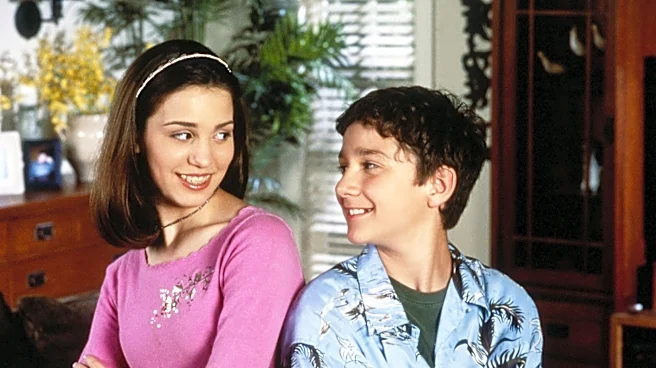
Christy Carlson Romano, known for her role in Disney Channel's 'Even Stevens,' recently shared insights into her working relationship with co-star Shia LaBeouf. During an interview, Romano explained that their differing childhood experiences led to a lack
of personal connection on set, despite their convincing on-screen sibling chemistry. Romano described her upbringing as disciplined and structured, akin to her character Ren Stevens, emphasizing her focus on preparation and hitting her marks. In contrast, she characterized LaBeouf's childhood as 'chaotic' and at times 'frightening,' stemming from his upbringing in Venice Beach. These divergent backgrounds, according to Romano, contributed to their personalities clashing and made them feel like 'oil and water' off-screen. Despite the personal differences, Romano acknowledged LaBeouf's drive, noting his initiative in finding his own manager at a young age by searching through a phone book.
Why It's Important?
This revelation offers a glimpse into the often-complex dynamics behind the scenes of popular television productions, particularly those involving child actors. It highlights how personal backgrounds and differing experiences can shape professional relationships, even when actors are portraying close bonds on screen. For the entertainment industry, it underscores the unique pressures and challenges faced by young performers, whose personal development often occurs in the public eye and within demanding work environments. The contrasting narratives of Romano's structured upbringing and LaBeouf's more chaotic one also shed light on the diverse paths child actors take and how these paths can influence their professional conduct and personal interactions. Understanding these dynamics can inform discussions about child welfare in Hollywood and the support systems available to young talent.
What's Next?
While Romano's comments are retrospective, they contribute to ongoing conversations about the experiences of child stars and the long-term impacts of early fame. Such discussions often lead to increased scrutiny of working conditions for minors in entertainment and potential reforms in how young actors are managed and supported. For both actors, these insights add another layer to their public narratives, potentially influencing how their past work is viewed and understood by audiences and industry professionals. It may also encourage other former child stars to share their experiences, further enriching the dialogue around the realities of growing up in the entertainment industry. The ongoing interest in these behind-the-scenes stories suggests a continued public fascination with the personal lives of celebrities, particularly those who began their careers at a young age.
Beyond the Headlines
The differing childhoods of Romano and LaBeouf, as described, touch upon broader societal themes regarding the impact of environment on individual development and professional conduct. Romano's disciplined approach reflects a common expectation in structured environments, while LaBeouf's 'chaotic' background points to the resilience and self-reliance often fostered in less conventional upbringings. This contrast can be seen as a microcosm of how diverse personal histories can converge in a professional setting, leading to both friction and unexpected strengths. Ethically, it raises questions about the responsibility of production companies and guardians in ensuring a stable environment for child actors, especially when their home lives may be less than ideal. Culturally, it reinforces the narrative of the 'child star' as a unique phenomenon, often navigating intense public scrutiny while simultaneously undergoing critical developmental stages, leading to varied and sometimes challenging adult lives.