






What's Happening?
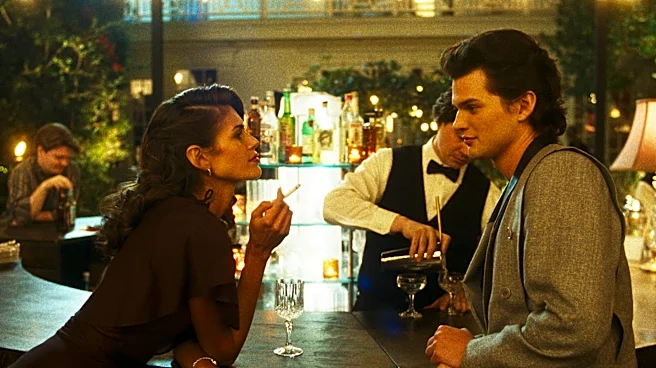
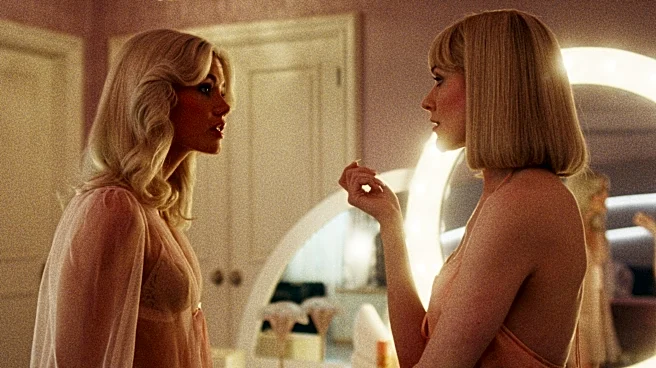
Kaia Gerber and Homer Gere star in the new FX series 'The Shards', an adaptation of Bret Easton Ellis's novel. The series, set in 1981, follows a group of affluent high school students in Los Angeles as they navigate their senior year amidst a backdrop
of a serial killer on the loose. Gerber plays Susan Reynolds, a character who is the best friend of Bret Easton Ellis, portrayed by Igby Rigney, and the love interest of Thom Wright, played by Graham Campbell. Homer Gere plays Robert Mallory, a mysterious new student who disrupts the social dynamics of the group. The series is noted for its exploration of complex relationships and the challenges of adolescence, set against the glitzy yet dangerous backdrop of 1980s Los Angeles.
Why It's Important?
The series 'The Shards' is significant as it marks a collaboration between Ryan Murphy and Bret Easton Ellis, two prominent figures in the entertainment industry known for their provocative storytelling. The show delves into themes of privilege, identity, and the dark undercurrents of teenage life, reflecting broader societal issues. It also highlights the pressures faced by young people in affluent environments, making it a relevant commentary on contemporary issues of mental health and societal expectations. The casting of Kaia Gerber and Homer Gere, both children of famous parents, adds an additional layer of intrigue, as it draws parallels between their real-life backgrounds and their on-screen characters.
What's Next?
As 'The Shards' progresses, viewers can expect to see the unfolding of the central mystery involving the serial killer, known as The Trawler, and its impact on the characters' lives. The series will likely explore deeper themes of fear, paranoia, and the loss of innocence as the characters confront the dangers lurking in their seemingly glamorous world. The show is set to air new episodes weekly, allowing audiences to follow the evolving storylines and character developments.
Beyond the Headlines
Beyond its immediate plot, 'The Shards' offers a reflection on the cultural and social dynamics of the early 1980s, a period marked by significant changes in fashion, music, and societal norms. The series also touches on the concept of 'autofiction', blending real-life elements with fictional narratives, which may prompt discussions on the nature of storytelling and the boundaries between reality and fiction. Additionally, the show’s portrayal of a high school environment dominated by wealth and privilege may spark conversations about the impact of socio-economic status on youth culture and behavior.