
What's Happening?
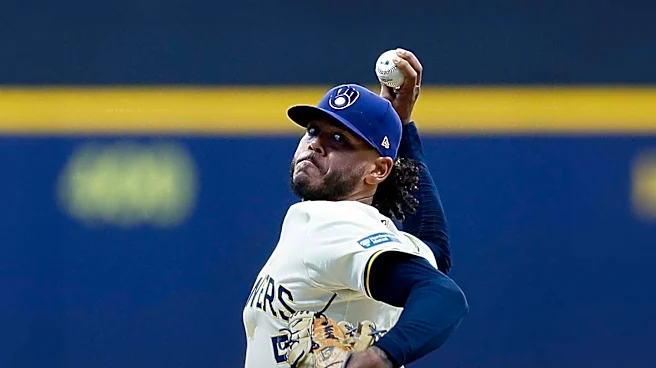
The Milwaukee Brewers are contemplating the future of All-Star closer Trevor Megill, who is entering his final year of arbitration eligibility and is set to become a free agent after the 2027 season. Megill, 32,
has been a top reliever in baseball, logging a 2.63 ERA in 63 appearances with 30 saves in 2026, and has maintained a sub-3.00 ERA for the past three seasons. He was also named a finalist for the National League Reliever of the Year Award. Despite his crucial role in the Brewers' 2026 World Series victory, the team has a history of trading star players before they reach free agency to acquire prospects and maintain long-term success. ESPN's Jeff Passan reported that the Brewers will "at least listen" to trade offers for Megill this offseason, creating a significant decision point for the organization.
Why It's Important?
The potential trade of Trevor Megill is significant for the Milwaukee Brewers as it reflects a long-standing organizational strategy of maximizing player value by trading stars before they hit free agency. This approach has allowed the Brewers to consistently replenish their farm system and remain competitive, as evidenced by their recent World Series win. However, trading a key player like Megill, especially after a championship season, could impact team morale and fan expectations for a repeat. For other MLB teams, particularly those in need of bullpen reinforcement like the New York Yankees and Chicago White Sox, Megill represents a high-value acquisition. His proven performance and experience could significantly bolster a contender's bullpen, potentially shifting the competitive landscape in both leagues. The decision will also set a precedent for how the Brewers balance immediate championship aspirations with their long-term roster development philosophy.
What's Next?
The Milwaukee Brewers are expected to actively listen to trade offers for Trevor Megill throughout the offseason. His high trade value, stemming from his consistent elite performance and recent World Series contribution, makes him an attractive target for several teams. The New York Yankees' interest in Megill, for instance, is reportedly contingent on whether their current closer, David Bednar, accepts a qualifying offer. If Bednar declines, the Yankees could aggressively pursue Megill. Similarly, the Chicago White Sox, who made the postseason with a strong bullpen but lacked a dominant closer, could view Megill as a significant upgrade. The Brewers' decision will likely hinge on the quality of trade packages offered, as they aim to acquire prospects or players that align with their long-term strategy, while also considering the impact on their immediate competitiveness for the 2027 season.
Beyond the Headlines
The dilemma surrounding Trevor Megill highlights a broader philosophical tension in professional sports between short-term success and long-term sustainability. While keeping Megill would undoubtedly strengthen the Brewers' chances for a repeat championship, trading him aligns with a calculated strategy that has historically yielded sustained competitiveness for the franchise. This approach, often seen in smaller market teams, prioritizes asset management and future flexibility over retaining every star player. The decision also touches upon the financial realities of MLB, where arbitration and free agency timelines often force teams to make difficult choices about player retention. The outcome of this situation could influence how other teams with similar market constraints manage their star players, potentially reinforcing a trend of strategic trades even after periods of significant success.