




What's Happening?
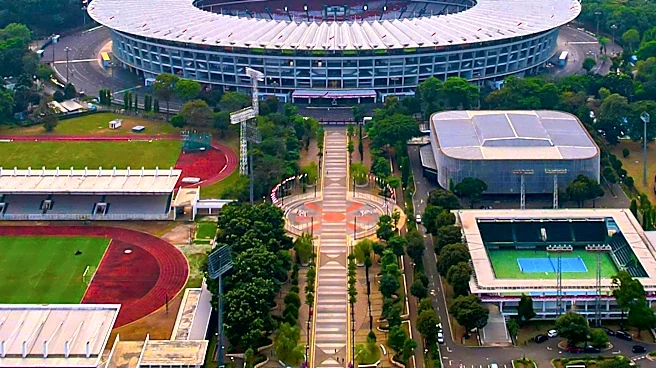
The City of Quincy is moving forward with plans to construct a new sports complex, to be located east of 48th and Maine. The City Council has given in-principle approval for the use of bonds to finance the project. This initiative is being developed with close
collaboration between Quincy City Hall and the Great River Economic Development Foundation (GREDF), led by its president, Kyle Moore. The city has committed to purchasing five acres of land, which will supplement an additional 10 acres being donated for the complex. A formal bond issue review will take place once the design and budgeting phases for the project are finalized. This development positions Quincy to potentially gain a head start over neighboring Macomb, which is also pursuing a sports complex but is relying on state-level STAR bonds, a process that typically involves longer state approval timelines.
Why It's Important?
This development is significant for Quincy's economic landscape and tourism sector. The proposed sports complex aims to attract large tournaments and convention events, which are expected to boost local businesses, particularly hotels and restaurants. Kyle Moore of GREDF highlighted that such facilities often lead to the development of unique attractions around them, allowing each community to market its distinct offerings. The city's decision to use municipal bonds, rather than state STAR bonds like Macomb, could accelerate the project's completion, giving Quincy a competitive advantage in drawing regional sports tourism. The success of this project could serve as a model for other mid-sized U.S. cities looking to stimulate local economies through sports infrastructure development, demonstrating how local funding mechanisms can bypass state-level bureaucratic delays.
What's Next?
The immediate next steps for Quincy involve completing the design and budgeting work for the sports complex, after which the City Council will review the bond issue. Assuming approval, the city plans to initially cover bond payments using funds from its Food and Beverage Tax until the facility generates sufficient income to become self-sustaining. A key challenge identified by Moore is the current shortage of hotel rooms in Quincy to accommodate the influx of visitors expected from tournaments. GREDF is actively engaging with national hotel operators to address this, and the development of new hotels is anticipated to attract more restaurants. Additionally, efforts are underway to improve transportation options, including enhancing air service and encouraging the growth of ride-share and taxi services, to better serve out-of-town guests.
Beyond the Headlines
The competition between Quincy and Macomb to develop sports complexes, while framed as cooperative by Kyle Moore, underscores a broader trend in regional economic development where cities vie for tourism dollars through infrastructure investments. Quincy's approach of leveraging local bonds and existing tax revenues reflects a strategic move to maintain autonomy and speed in project execution, contrasting with Macomb's reliance on state STAR bonds which, while potentially offering significant state support, come with more stringent requirements and longer approval processes. This situation highlights the varying strategies U.S. cities employ to fund large-scale public projects and the implications of these choices on project timelines and local control. The success of Quincy's complex could influence future municipal funding decisions across the state and region, demonstrating the efficacy of local financial independence in driving economic growth.