


What's Happening?
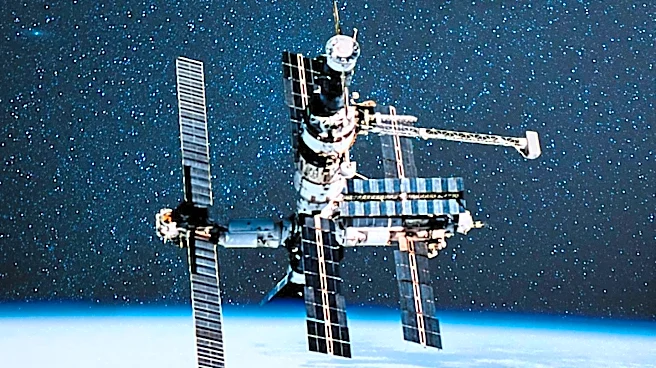
NASA's British-American astronaut Michael Foale recently discussed the 1997 Space Station Mir crisis in an interview. The incident involved a collision between an unmanned Progress cargo ship and the Russian space station Mir, which resulted in a decompression
event that posed a significant threat to the crew's safety. Foale, along with cosmonauts Vasily Tsibliev and Alexander Lazutkin, managed to stabilize the situation by repairing the damage and preventing the station from spinning out of control. The collision was attributed to a manual docking attempt without radar, a decision made to save costs. Foale recounted the stress and responsibility felt by the crew, particularly Tsibliev, who bore the brunt of the blame. The event is featured in the PBS miniseries 'Once Upon a Time in Space,' which explores pivotal moments in space history.
Why It's Important?
The 1997 Mir crisis highlights the risks and challenges of space exploration, particularly when cost-saving measures compromise safety. The incident underscores the importance of reliable technology and thorough preparation in space missions. It also reflects on the human element in space exploration, where decisions made under pressure can have life-threatening consequences. The story of the Mir crisis serves as a reminder of the resilience and ingenuity required to overcome such challenges. It also emphasizes the need for international collaboration and the sharing of resources and expertise in space endeavors, which can lead to safer and more successful missions.
What's Next?
The legacy of the Mir crisis continues to influence current and future space missions. Lessons learned from the incident have likely informed safety protocols and decision-making processes in subsequent missions. As space exploration advances, with increased involvement from private companies and international partnerships, the emphasis on safety and collaboration remains crucial. The story of Mir may also inspire future astronauts and engineers to prioritize innovation and safety in their work. Additionally, the PBS series 'Once Upon a Time in Space' may spark renewed interest in space history and the personal stories of those who have contributed to its development.
Beyond the Headlines
The Mir crisis also raises questions about the ethical considerations of space exploration, particularly regarding the balance between cost and safety. The decision to attempt a manual docking without radar, driven by financial constraints, highlights the potential risks of prioritizing budget over safety. This incident serves as a case study for the ethical responsibilities of space agencies and corporations involved in space exploration. It also reflects on the psychological impact of space missions on astronauts, who must navigate high-pressure situations and the potential for blame and guilt in the aftermath of crises.