





What's Happening?
The new film 'Wicker,' directed by Alex Huston Fischer and Eleanor Wilson, offers a darkly humorous fable about marriage, passion, and societal expectations. Adapted from Ursula Wills' short story 'The Wicker Husband,' the movie is set in an 18th-century
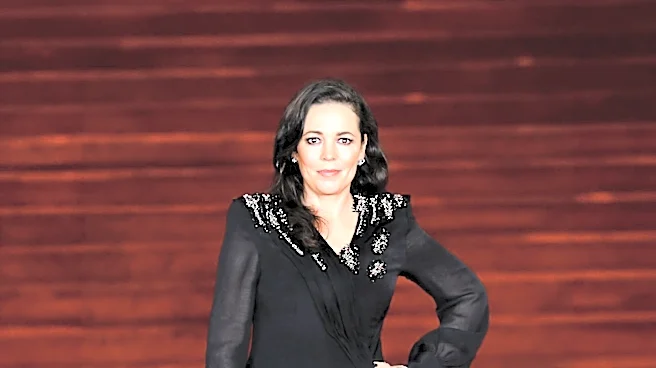
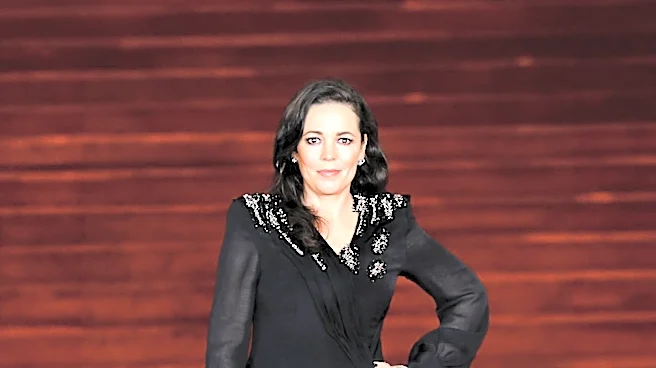
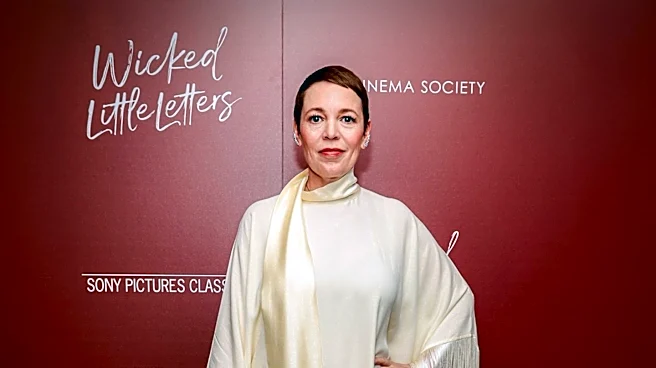
English village where characters are known by their occupations. Olivia Colman stars as the Fisherwoman, a solitary figure ridiculed by her community for her unkempt appearance and single status. Impulsively, she commissions the Basketmaker (Peter Dinklage) to create a husband for her. The result is the Wicker Husband (Alexander Skarsgård), a non-human yet perceptive and devoted partner. Their unconventional relationship challenges the rigid social norms of the village, sparking both curiosity and hostility. The film delves into themes of unconditional love and self-actualization, using its period setting to critique contemporary societal pressures and the institution of marriage. The narrative highlights the Fisherwoman's journey as she navigates her unique marital situation amidst the judgmental eyes of her neighbors.
Why It's Important?
The film 'Wicker' is important for its sharp satirical commentary on societal norms and the institution of marriage, offering a fresh perspective on gender roles and expectations. By setting the story in an 18th-century village, it creates a timeless critique of conformity and the pressures individuals face to adhere to conventional lifestyles. The unconventional relationship between the Fisherwoman and the Wicker Husband serves as a catalyst for examining how communities react to difference and how personal happiness can clash with societal approval. The film's feminist undertones, particularly in the Fisherwoman's rejection of traditional symbols of ownership in marriage, resonate with contemporary discussions about autonomy and partnership. It prompts viewers to reflect on the nature of love, devotion, and the courage required to defy societal expectations, making it relevant to broader conversations about individual freedom and social acceptance in modern society.
What's Next?
As 'Wicker' screens at venues like Alamo Drafthouse Seaport, its reception will likely contribute to ongoing discussions about satirical cinema and its role in social commentary. The film's unique premise and strong performances from Olivia Colman, Alexander Skarsgård, and Peter Dinklage could generate significant critical attention and audience engagement. Its exploration of themes such as unconventional relationships, societal judgment, and personal fulfillment may spark further dialogue in film criticism and among viewers. The success of 'Wicker' could also influence future filmmaking, encouraging more productions that blend period settings with sharp, timely social critiques. The film's ability to entertain while provoking thought suggests it may have a lasting impact on how audiences perceive and discuss the complexities of human relationships and societal pressures.
Beyond the Headlines
Beyond its immediate narrative, 'Wicker' delves into deeper implications regarding the construction of identity and the pursuit of happiness outside conventional frameworks. The Wicker Husband, a created being, embodies an idealized partner who exists solely for his wife's happiness, prompting questions about the nature of devotion and the expectations placed on partners in relationships. The film subtly explores the ethical dimensions of creating a companion and the societal discomfort with anything that deviates from the norm. It also touches upon the psychological impact of societal judgment, as the Fisherwoman, despite her initial defiance, eventually succumbs to the jealousy and small-mindedness pervading her village. This highlights the pervasive power of social pressure and the internal struggles individuals face when trying to maintain authenticity in the face of external scrutiny, offering a nuanced look at human vulnerability and resilience.