


What's Happening?
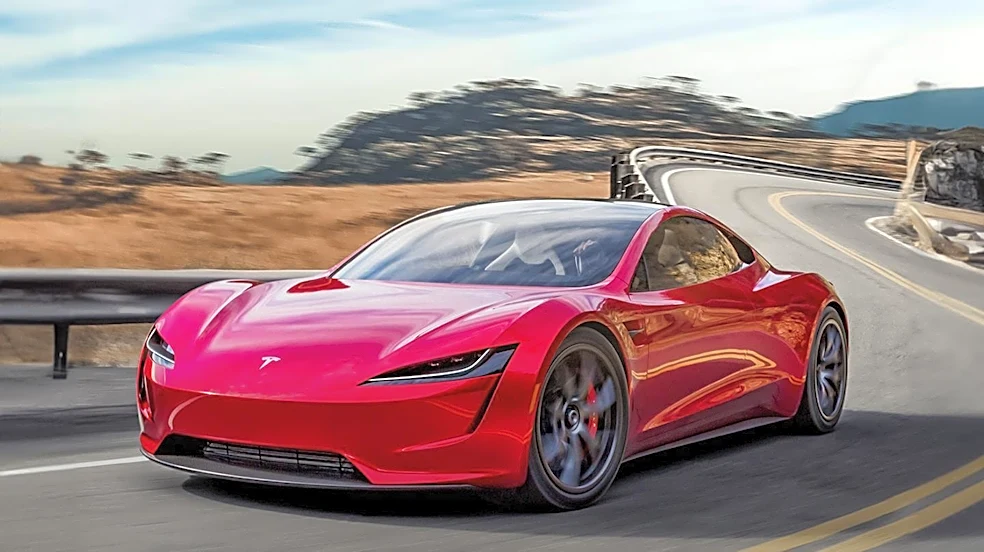
Tesla Inc. unveiled its new 'flying' Roadster electric vehicle prototype, which features air thrusters developed with SpaceX. The prototype demonstrated aerial stunts, including jumping over other cars and flipping in midair. The reveal garnered significant
attention and praise from prominent figures. President Trump described the vehicle as 'very impressive,' while Alphabet Inc. CEO Sundar Pichai extended congratulations to Elon Musk. OpenAI chief executive Sam Altman also praised the Roadster on X, despite having previously canceled his pre-order due to delays. The Roadster is a long-delayed model that Tesla showcased with an over-the-top presentation, highlighting its advanced capabilities and innovative design. The positive reactions from these influential individuals underscore the impact of Tesla's latest automotive innovation.
Why It's Important?
The widespread praise for Tesla's new Roadster, particularly from figures like President Trump, Sundar Pichai, and Sam Altman, signifies a notable moment for the electric vehicle industry and technological innovation in the U.S. This endorsement from diverse leaders—political, tech, and AI—lends significant credibility and public interest to advanced automotive technologies. For Tesla, this positive reception could translate into increased market confidence, potential pre-orders, and further investment in its ambitious projects. The involvement of SpaceX technology, specifically air thrusters, in a consumer vehicle blurs the lines between automotive and aerospace engineering, potentially accelerating cross-industry innovation. This development could also influence public perception of electric vehicles, moving them beyond mere transportation to a realm of high-performance, futuristic mobility, thereby impacting consumer adoption and regulatory frameworks for advanced vehicle capabilities.
What's Next?
Following the high-profile unveiling and positive reactions, Tesla is expected to continue development and testing of the Roadster. The company will likely focus on refining the air thruster technology and integrating it seamlessly into the vehicle for production. Given the 'long-delayed' status mentioned, Tesla will face pressure to provide a more concrete timeline for market availability and pricing. The praise from influential figures could also spur competitors to accelerate their own advanced vehicle research and development, potentially leading to a new wave of innovation in the electric vehicle and personal mobility sectors. Regulatory bodies may also begin to consider the implications of vehicles with aerial capabilities, potentially leading to new guidelines or classifications for such advanced transportation methods. Public interest will likely remain high, with consumers eagerly awaiting further updates on the Roadster's progress towards commercialization.
Beyond the Headlines
The introduction of a 'flying' electric vehicle like Tesla's Roadster, endorsed by leading figures across technology and politics, points to a deeper societal shift towards integrating advanced aerospace capabilities into everyday transportation. This development challenges traditional notions of mobility and could redefine urban planning, infrastructure, and even personal freedom of movement in the long term. The ethical implications of such technology, including safety regulations for aerial maneuvers in civilian vehicles and potential noise pollution, will become increasingly relevant. Furthermore, the convergence of automotive and space technology, exemplified by SpaceX's involvement, highlights a trend of cross-industry collaboration that could lead to unforeseen innovations and challenges. This could also spark a broader public discourse on the future of transportation, the role of private companies in pushing technological boundaries, and the balance between innovation and public safety.