







What's Happening?
Union Commerce and Industry Minister Piyush Goyal announced on November 12 that India expects to secure one of the most advantageous trade agreements with the United States. He stated that India would gain preferential access to the American market, positioning
it favorably against competing economies. According to Goyal, the proposed agreement would provide Indian exporters with an edge over countries producing similar goods and operating at comparable levels of economic development. These remarks come as New Delhi and Washington continue discussions to finalize the initial phase of their bilateral trade agreement, following extensive negotiations on tariffs and market access. While Goyal did not provide a specific timeline for the deal's conclusion, he emphasized that India's trade relations are not influenced by the domestic political developments or election outcomes in partner countries, including the recent U.S. midterm elections.
Why It's Important?
This anticipated trade deal holds significant importance for U.S. economic stakeholders, particularly those involved in international trade and manufacturing. A preferential market access for Indian goods could lead to increased competition for U.S. domestic producers in certain sectors, potentially impacting their market share and pricing strategies. Conversely, U.S. consumers might benefit from a wider array of competitively priced Indian products. For U.S. businesses looking to export to India, the deal could signal a more stable and predictable trade environment, potentially reducing tariff barriers and streamlining customs processes. The emphasis on 'most preferred market access' suggests a strategic alignment between the two nations, which could influence global supply chains and trade dynamics, potentially shifting manufacturing or sourcing decisions for U.S. companies. The deal's structure will determine which U.S. industries might face increased import competition and which could see new export opportunities.
What's Next?
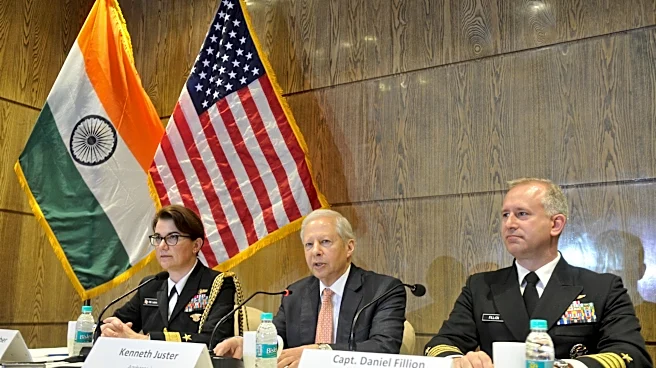
Negotiations between India and the U.S. are ongoing, with the first phase of their bilateral trade agreement framework having been finalized in February. However, changes in the U.S. tariff landscape have necessitated further discussions before the pact can be concluded. A two-member team of U.S. officials recently visited India for discussions primarily focused on trade and customs facilitation with Indian customs authorities. While no specific timeline has been provided, Commerce and Industry Minister Piyush Goyal indicated that an announcement on the deal could come soon, with only a few remaining issues to be resolved. The outcome of these ongoing discussions will determine the final terms of the agreement and its implementation, which will then dictate the specific impacts on trade flows and market access for both countries.
Beyond the Headlines
The ongoing trade negotiations between India and the U.S. extend beyond immediate economic benefits, reflecting a broader geopolitical strategy. India's assertion of not linking trade relations to the domestic political developments of partner countries, such as U.S. elections, highlights a commitment to long-term, stable economic partnerships independent of short-term political cycles. This approach could foster greater predictability and trust in international trade relations. Furthermore, the pursuit of 'most preferred market access' for Indian goods in the U.S. market suggests a strategic effort by India to enhance its global economic standing and diversify its trade relationships. This could lead to a re-evaluation of existing trade agreements and alliances by other nations, potentially influencing global trade policies and economic blocs in the long run. The deal could also set a precedent for how emerging economies negotiate with established economic powers, emphasizing mutual benefit and strategic market positioning.