









What's Happening?
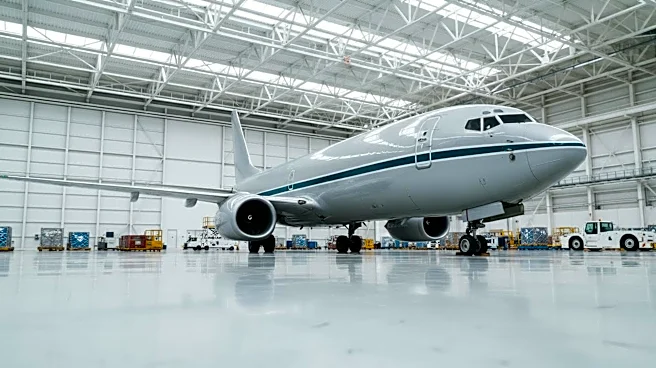
FTAI Aviation and Aeronautical Engineers Inc. (AEI) have announced a partnership to supply and support Boeing 737-800 converted freighters. This collaboration involves FTAI sourcing midlife aircraft and acquiring AEI's conversion kits, with the aircraft being
converted within AEI's network. The freighters will be equipped with CFM56-7 engines provided by FTAI. These completed freighters will either be sold to operators or placed in special purpose vehicles (SPVs) backed by institutional investors and leased out. The partnership aims to extend the lifecycle of the CFM56 engines across passenger, cargo, and power applications. The demand for 737-800F capacity has surged due to the post-pandemic e-commerce boom, despite overall demand moderating. FTAI's module-swap approach is designed to meet the needs of cargo operators by providing engines tailored for cargo's lower-utilization and cost-focused approach.
Why It's Important?
This partnership is significant as it addresses the growing demand for freighter capacity, particularly in the e-commerce sector, which has seen a rapid increase post-pandemic. By extending the lifecycle of the CFM56 engines and providing a cost-effective solution for cargo operators, FTAI and AEI are positioning themselves to capitalize on the freighter market. The collaboration also highlights the importance of adapting existing aircraft for cargo use, especially given the delays in new aircraft deliveries. This move could potentially alleviate the freighter-supply bottleneck and provide a sustainable solution for the aviation industry, which is crucial for maintaining supply chain efficiency in the U.S. and globally.
What's Next?
The first conversion under this partnership is set to begin in the coming weeks at AEI's network partner Staeco in Shandong province, China. As more 737-800s become available, the partnership plans to conduct a significant number of conversions. This initiative could lead to increased availability of freighter aircraft, thereby supporting the logistics and e-commerce sectors. The success of this partnership may also encourage other companies in the aviation industry to explore similar collaborations, further enhancing the capacity and efficiency of cargo operations.