





What's Happening?
OEG, a global energy solutions company, has been awarded a contract by Ørsted to provide temporary power for the Hornsea 3 Offshore Wind Farm. This contract involves delivering temporary power during the offshore converter station commissioning works
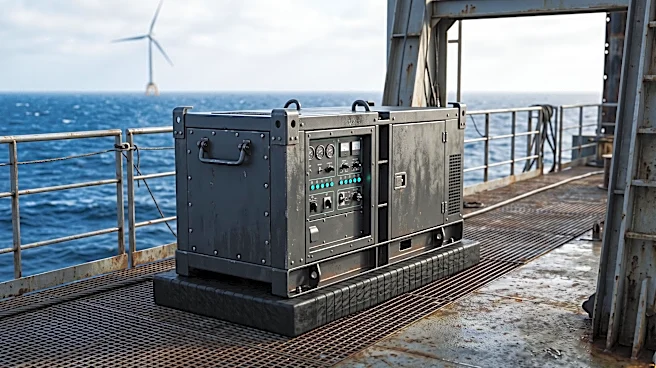
and the turbine installation and commissioning phases. Specifically, OEG will supply generators for a jack-up vessel, offering up to 1,400 kVA for the offshore converter station, and 150 kVA generators with bespoke 3,000-liter fuel tanks for turbine installation. This modular setup is designed to maximize power output while minimizing the equipment footprint on the transition piece, where space is limited. This agreement extends OEG's existing relationship with Ørsted, having previously supported Hornsea 1 and Hornsea 2, as well as other global projects.
Why It's Important?
This contract highlights the ongoing demand for specialized support services in the rapidly expanding offshore wind energy sector. The provision of temporary power is critical for the efficient and safe commissioning and installation of offshore wind infrastructure. OEG's ability to provide bespoke technical solutions, such as synchronized generators and compact fuel tanks, demonstrates the innovation required to overcome the logistical challenges of offshore environments. For the U.S. offshore wind industry, this underscores the importance of a robust supply chain and specialized service providers to support large-scale projects. The successful execution of such contracts can serve as a model for future developments, potentially influencing best practices and technological adoption in the U.S. market as it continues to grow.
What's Next?
OEG will proceed with the delivery and implementation of the temporary power solutions for the Hornsea 3 Offshore Wind Farm. The collaboration between OEG and Ørsted's construction management team is expected to continue through the project's completion. This successful partnership could lead to further contracts for OEG in future Ørsted projects, both in Europe and potentially in the U.S., as Ørsted has a significant presence in the American offshore wind market. The experience gained from this project may also inform the development of new technologies and methodologies for temporary power provision in offshore wind, which could then be applied to U.S. projects, contributing to their efficiency and cost-effectiveness.
Beyond the Headlines
The increasing reliance on specialized contractors like OEG for critical components of offshore wind farm development points to a broader trend in the renewable energy sector: the need for highly integrated and adaptable supply chains. The logistical complexities of offshore construction, particularly in managing power requirements for remote installations, necessitate innovative solutions. This contract also subtly emphasizes the environmental benefits of optimizing operations; by ensuring efficient power supply during construction, the overall carbon footprint of the project can be managed more effectively. Furthermore, the long-standing relationship between OEG and Ørsted suggests a move towards strategic partnerships in the industry, where proven expertise and reliability are highly valued, potentially influencing how U.S. offshore wind developers select their partners.