

What's Happening?
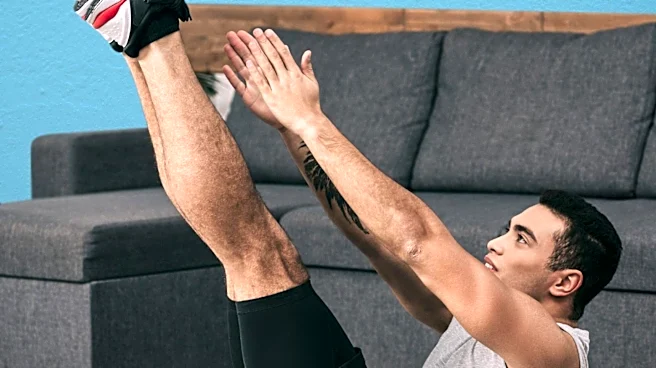
A guide to at-home ab workouts for men highlights various exercises focusing on core strength and stability without requiring specialized equipment. The core muscles, including the rectus abdominis, external obliques, erector spinae, quadratus lumborum,
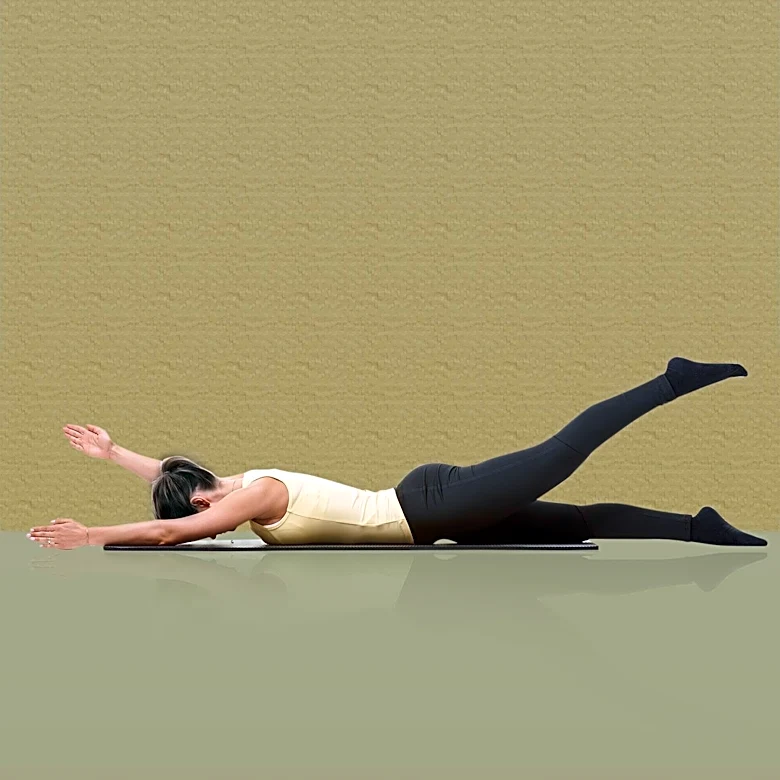
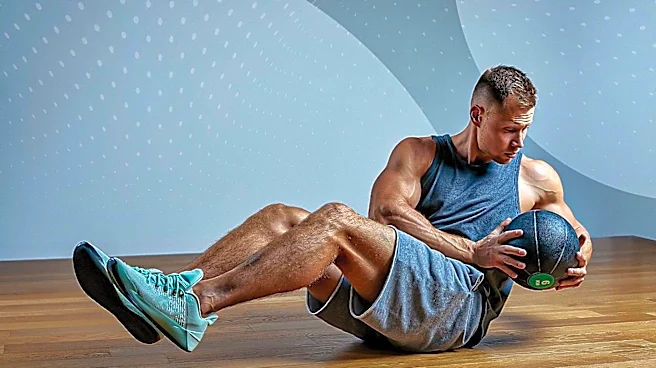
and hip musculature, are crucial for trunk control, posture, and movement. The guide provides a range of exercises such as curl-ups, side crunches, planks, bird dogs, and bridges, which target different parts of the trunk. It emphasizes that a varied routine incorporating both movement-based exercises and holds is effective. The article also details how to adjust the difficulty of workouts by slowing tempo, adding pauses, increasing repetitions or sets, and gradually progressing. It clarifies that visible abdominal definition is not guaranteed solely through these exercises, as abdominal fat reduction is a separate factor.
Why It's Important?
This information is important for promoting accessible fitness and health among men in the U.S. By providing detailed, no-equipment ab workouts, it empowers individuals to improve their core strength and overall physical well-being from home. Strong core muscles are vital for daily activities, injury prevention, and maintaining good posture, which can reduce the incidence of back pain and improve functional movement. The emphasis on proper technique and gradual progression helps individuals build strength safely and effectively, reducing the risk of injury often associated with improper exercise. This approach can contribute to a healthier population by making fitness routines more attainable and less intimidating, especially for those who may not have access to a gym or prefer home-based exercise.
What's Next?
Individuals can immediately implement these suggested exercises into their fitness routines. The guide recommends starting with a manageable workload, such as the beginner circuit, and gradually increasing intensity. It advises performing ab workouts two to three times per week on nonconsecutive days to allow for muscle recovery and growth. Users are encouraged to focus on controlled technique and adjust repetitions if they cannot maintain proper form. For those seeking more structured guidance, the article suggests exploring additional resources like calisthenics workout guides or consulting qualified professionals for personalized plans, especially if discomfort arises during exercises. The continuous adjustment of workout parameters will be key to sustained progress.
Beyond the Headlines
The focus on at-home, no-equipment workouts reflects a broader trend towards accessible and flexible fitness solutions, particularly relevant in a post-pandemic landscape where home-based activities have gained prominence. This shift democratizes fitness, making it less dependent on gym memberships or expensive equipment, and potentially reducing health disparities by lowering barriers to entry. The article subtly challenges the aesthetic-driven motivation for ab workouts by stating that visible abs are not guaranteed, instead promoting functional strength and endurance as primary goals. This reorientation towards health and performance over purely cosmetic outcomes can foster a more sustainable and body-positive approach to fitness, encouraging long-term engagement rather than short-term, often unsustainable, pursuits of an idealized physique.