




What's Happening?
Peter Thiel, co-founder of PayPal and Palantir, has made a significant investment of $76 million, representing 18% of his Thiel Macro fund, into Vista Energy, a leading private oil company in Argentina. This move highlights Thiel's interest in the traditional
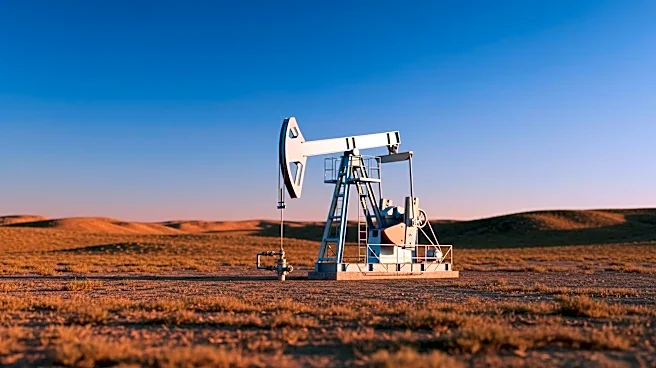
energy sector and his admiration for President Javier Milei's administration. Vista Energy is a key player in the Vaca Muerta shale reserves, a region in the Neuquén Basin of northern Patagonia that is emerging as a major global oil and gas frontier. The company is the largest private entity in Argentina's oil sector and the country's top oil exporter, which analysts believe makes it resilient to potential political shifts. Vista Energy's stock has seen a 390% appreciation in dollars since early 2023, driven by investor optimism surrounding President Milei and increased local oil production. The company, founded in 2017, has invested over $6.5 billion and boasts proven reserves of 588 million barrels, with current production around 156,000 barrels of oil equivalent per day. The news of Thiel's investment led to a 5.64% rise in Vista's shares on the New York Stock Exchange.
Why It's Important?
This investment by Peter Thiel, a prominent U.S. tech entrepreneur and investor, signals growing confidence in Argentina's energy sector and its economic future under President Javier Milei. Thiel's backing could attract further foreign investment into the Vaca Muerta shale, potentially solidifying Argentina's position as a significant global oil producer. For the U.S. energy market, increased production from Argentina could contribute to global supply, potentially influencing oil prices and energy security. The investment also underscores a broader trend of U.S. capital flowing into emerging markets with perceived growth potential, especially in sectors like energy that are critical for global demand. The success of Vista Energy, often compared to Brazil's PRIO, could serve as a model for other private energy companies in Latin America seeking international investment. Furthermore, the investment reflects a strategic bet on the long-term viability of fossil fuels, even as global efforts lean towards renewable energy, indicating a diversified investment approach by major U.S. funds.
What's Next?
Following Peter Thiel's investment, Vista Energy is likely to continue its growth trajectory, potentially through further mergers and acquisitions, as indicated by bankers tracking the company. The company's focus on the Vaca Muerta shale reserves, coupled with Argentina's 'Regime of Incentives for Large Investments' (RIGI), is expected to drive further development and investment in infrastructure to address previous bottlenecks in outflow. There is also anticipation of Argentina's potential return to the global MSCI stock index, possibly in 2027, which could further boost investor confidence and attract more institutional capital. The re-election of President Milei, though uncertain, is also cited as a potential upside for the company. The entry of other significant U.S. players, such as Continental Resources, into the Argentine oil sector suggests a growing interest and potential for increased competition and collaboration in the region. This could lead to more U.S. companies exploring investment opportunities in Argentina's energy landscape.
Beyond the Headlines
Thiel's investment in Vista Energy goes beyond a simple financial transaction; it represents a strategic alignment with a political ideology and an economic vision. Thiel's open admiration for President Javier Milei suggests a belief in the potential for significant economic reforms and deregulation in Argentina, which could create a more favorable environment for foreign capital. This move could also be interpreted as a broader statement on the future of energy, where traditional oil and gas continue to play a crucial role despite the global push for renewable energy. The investment highlights the complex interplay between geopolitics, economic policy, and investment decisions, particularly in resource-rich nations. It also raises questions about the long-term environmental implications of expanding shale oil extraction in Vaca Muerta and how such investments align with global climate goals. The success or failure of this investment could influence future U.S. investment patterns in similar emerging markets and energy sectors.