







What's Happening?
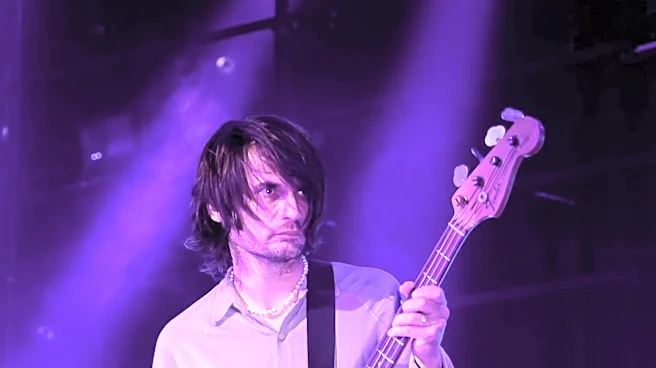
Jonny Greenwood, guitarist and co-leader of Radiohead, performed two sold-out shows in Jerusalem with his long-time Israeli collaborator Dudu Tassa. The performances, which took place at the Jerusalem Theatre’s Sherover Hall, were part of the 27th Jerusalem International
Oud Festival. The duo presented their 2023 joint album, 'Jarak Qaribak' (Your Neighbor is Your Friend), which reinterprets classic Arabic love songs with modern rock, electronic, and world music elements. Greenwood's appearance is notable as he is one of the most high-profile artists to visit Israel since the October 7, 2023, massacre. Despite Radiohead's past criticisms of Israeli policies, Greenwood has demonstrated an ability to differentiate between government actions and the people and culture of the country, fostering a message of unity through music.
Why It's Important?
This collaboration underscores the power of music as a unifying force in regions marked by conflict and political tension. Greenwood's decision to perform in Israel, despite his band's nuanced political views, sends a message that cultural exchange can transcend political divides. The 'Jarak Qaribak' project itself, blending Middle Eastern and Western musical traditions, serves as a metaphor for bridging cultural gaps. Dudu Tassa's acknowledgment of bringing together 'friends from Israel, Baghdad and England' highlights the potential for music to foster understanding and connection amidst global turmoil. This event offers a counter-narrative to the prevalent focus on conflict, emphasizing shared humanity and the universal language of art.
What's Next?
The success of these performances may encourage other international artists to engage in cultural exchanges in politically sensitive regions, potentially fostering more dialogue and understanding. The Jerusalem International Oud Festival, by hosting such collaborations, continues to position itself as a platform for diverse musical expressions and cross-cultural dialogue. The message conveyed by Tassa and Greenwood—that music can transcend differences—could inspire further artistic initiatives aimed at promoting peace and unity. This event also sets a precedent for artists who wish to maintain their political stances while still engaging with the people and cultures they may have critiqued, suggesting a path for nuanced engagement rather than outright boycotts.
Beyond the Headlines
Beyond the immediate musical event, this collaboration highlights the complex relationship between art, politics, and personal conviction. Greenwood's history of critical views on Israeli policies, contrasted with his willingness to perform in the country, illustrates a sophisticated approach to international engagement. It challenges the notion that artists must either fully endorse or completely boycott a nation based on its government's actions. Instead, it suggests a model where cultural figures can engage with people and foster connections, even while holding critical perspectives. This nuanced stance can contribute to a more complex and productive global dialogue, moving beyond simplistic binaries and recognizing the multifaceted nature of international relations and cultural diplomacy.