
What's Happening?
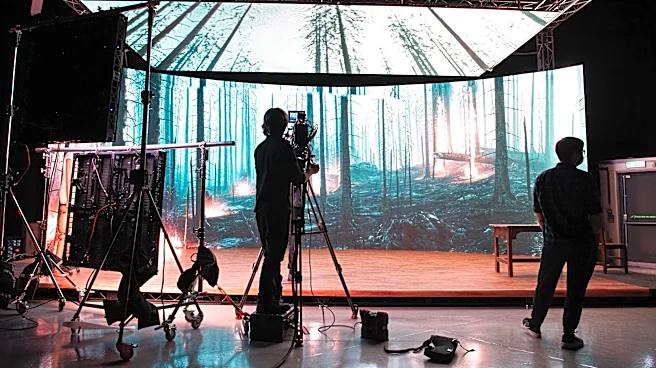
Brian T. Nowac, founder of Magicbox, has developed a mobile LED virtual production studio housed within a semi-trailer. This innovation allows for the creation of digital sets on location, addressing the high costs and logistical challenges associated
with traditional studio spaces. Nowac's journey began with his experience in video production and a realization of the potential for LED volumes after observing the production of 'The Mandalorian.' He initially sought a physical studio in Alameda but was deterred by the estimated $60,000 monthly rent and an additional $800,000 for power upgrades, which would also entail an 18-month waiting period. This led him to conceptualize a portable solution, sketching designs in Adobe Illustrator and pitching them to trailer builders. Craftsmen in the St. Louis area ultimately agreed to build the prototype. The patented design features screens attached to moving surfaces that deploy to form a set, accommodating camera tracking and computer systems for image generation. The prototype was tested with cinematographer Sam Nicholson at Stargate Studios and has since been used for various productions, including ABC's 'High Potential' and a collaboration with the San Francisco Giants for spring training content.
Why It's Important?
This development is significant for the U.S. film and television industry as it democratizes access to advanced virtual production technologies. By making LED volumes mobile and more affordable, Magicbox can reduce production costs and increase flexibility for filmmakers. Traditional virtual production stages require substantial investment in infrastructure and real estate, limiting their use to larger studios or well-funded projects. Nowac's solution allows productions to bring the set directly to the location, eliminating the need for extensive travel and complex logistics for actors and crew. This can particularly benefit independent filmmakers, advertising agencies, and sports organizations looking to create high-quality visual content without the overhead of a permanent studio. The ability to quickly set up and dismantle a virtual set in diverse locations, such as a parking lot for the San Francisco Giants, demonstrates a practical application that can streamline production workflows and open new creative possibilities.
What's Next?
Magicbox aims to expand its reach by deploying a fleet of these mobile LED studios across the country, making the technology accessible to more production teams. This expansion could lead to increased adoption of virtual production techniques in various sectors, from film and television to commercials and corporate content. The company's participation in events like Adobe MAX and its recognition on Pepperdine's Most Fundable Companies list suggest a growing interest from investors and industry professionals. Future developments may include further refinements to the mobile studio's technology, such as enhanced integration with other production tools and software. As the technology becomes more widespread, it could influence how content is created, potentially leading to more on-location virtual shoots and reducing the reliance on traditional green screen techniques or expensive sound stages. The goal is for customers to seamlessly integrate the technology into their workflow, making it an invisible yet powerful tool for storytelling.
Beyond the Headlines
The innovation by Magicbox represents a broader trend in the entertainment industry towards decentralization and technological accessibility. By miniaturizing and mobilizing complex production equipment, Nowac is challenging the traditional studio model, which has historically been centralized and capital-intensive. This shift could foster greater creative independence and regional production hubs, as filmmakers outside major production centers gain access to cutting-edge tools. Ethically, this could lead to more diverse storytelling by lowering barriers to entry for creators who previously lacked the resources for high-end visual effects. Legally, the patents granted to Nowac for his trailer design highlight the importance of intellectual property in this evolving technological landscape. Culturally, the ability to create realistic digital environments on demand could blur the lines between physical and virtual realities in filmmaking, influencing audience expectations and the very nature of visual storytelling. This mobile solution also underscores the ongoing drive for efficiency and cost-effectiveness in content creation, a critical factor in today's competitive media environment.