







What's Happening?
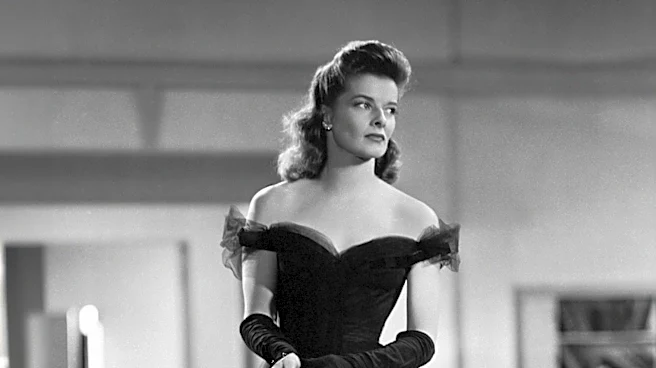
Elizabeth Taylor, a celebrated actress known for her resilience and iconic roles, held deep admiration for her co-star Katharine Hepburn. Taylor expressed a desire to emulate Hepburn's grace and wit, particularly after working together on the 1959 film
adaptation of Tennessee Williams' play, 'Suddenly, Last Summer.' Despite her own significant success and status as a Hollywood icon, Taylor viewed Hepburn with reverence, noting that every actress looked up to her without envy or jealousy. Taylor's career, which began at a young age, saw her rise to fame quickly, starring in films like 'National Velvet,' 'Giant,' and 'Cleopatra.' She was also recognized for her philanthropic efforts, particularly in the fight against AIDS, and her ability to navigate personal and professional challenges in the public eye.
Why It's Important?
This revelation about Elizabeth Taylor's admiration for Katharine Hepburn offers insight into the dynamics and mutual respect within Hollywood's golden age. It highlights that even highly successful individuals look to peers for inspiration, underscoring the human element behind celebrity. For the U.S. entertainment industry, it reinforces the legacy of actresses like Taylor and Hepburn, whose careers spanned decades and set benchmarks for performance and public persona. Taylor's ability to overcome personal struggles and maintain a prominent career, coupled with her philanthropic work, established her as more than just an actress but a cultural figure. Her perspective on Hepburn also provides a valuable historical context for understanding the qualities that were most valued in female performers during that era, such as grace, wit, and natural talent, rather than just beauty or fame.
What's Next?
While this specific anecdote is historical, its continued discussion contributes to the ongoing re-evaluation and appreciation of classic Hollywood figures. For film historians and enthusiasts, it adds another layer to the understanding of Elizabeth Taylor's artistic influences and personal aspirations. The enduring legacy of both Taylor and Hepburn continues to inspire new generations of actors and filmmakers, influencing acting techniques and career paths. Documentaries, biographies, and academic studies will likely continue to explore such relationships and influences, further cementing their place in cinematic history. The story also serves as a reminder of the importance of mentorship and admiration among peers, a dynamic that remains relevant in today's entertainment industry.
Beyond the Headlines
Beyond the surface of celebrity, Elizabeth Taylor's admiration for Katharine Hepburn speaks to a deeper human need for connection and inspiration, even among those at the pinnacle of their professions. It challenges the common perception of cutthroat competition in Hollywood, revealing moments of genuine respect and aspiration. Taylor's personal journey, marked by public scrutiny, addiction battles, and philanthropic dedication, positions her as a symbol of resilience. Her ability to 'take the positive from the negative' and her 'compulsive' drive to push through challenges resonate with broader themes of human perseverance. This narrative transcends mere entertainment news, touching upon the psychological aspects of fame, the search for authenticity, and the impact of role models on personal and professional development, offering a more nuanced view of the lives of iconic figures.