





What's Happening?
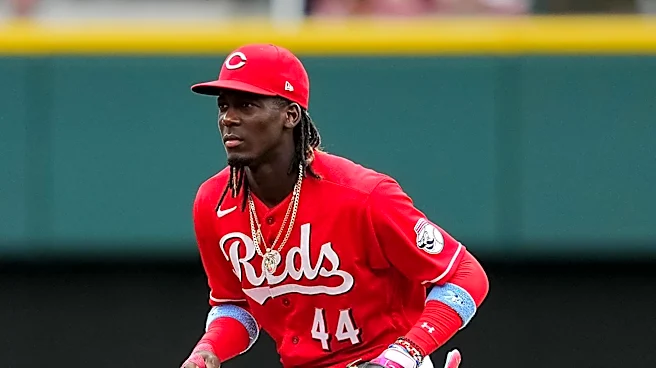
Cincinnati Reds infielder Sal Stewart has been performing exceptionally well this season, making a strong case for the National League Rookie of the Year Award. Despite his impressive statistics, Baseball America's Matt Eddy ranked Stewart as the 14th-best
rookie in Major League Baseball, a decision that has sparked controversy. Stewart has achieved a .255/.334/.477 slash line with 46 extra-base hits, including 23 home runs, and leads the league with 84 RBIs. His performance is notable, especially considering he has the most RBIs by a National League rookie since 1920. The ranking has been criticized for not reflecting Stewart's offensive contributions compared to other top rookies.
Why It's Important?
The ranking of Sal Stewart has broader implications for how rookie performances are evaluated in Major League Baseball. Stewart's lower-than-expected ranking could influence perceptions of his value and impact his chances of winning the Rookie of the Year Award. This situation highlights the subjective nature of player rankings and the potential disconnect between statistical performance and recognition. For the Cincinnati Reds, Stewart's performance is crucial as it contributes significantly to the team's success. The controversy also underscores the importance of fair and accurate assessments in sports, which can affect player morale and career trajectories.
What's Next?
As the season progresses, Sal Stewart will continue to be a key player for the Cincinnati Reds. His performance in the remaining games will be closely watched, especially in light of the ongoing debate about his ranking. The Reds and their fans will likely rally around Stewart, using the ranking as motivation. Additionally, the outcome of the Rookie of the Year Award will be a significant point of interest, potentially influencing future evaluations and rankings of rookies in the league.
Beyond the Headlines
The debate over Sal Stewart's ranking raises questions about the criteria used to evaluate rookie players. It highlights the potential biases in ranking systems and the need for transparency in how these decisions are made. This situation could lead to discussions within the league about improving the evaluation process to ensure that players are fairly recognized for their contributions. Furthermore, it emphasizes the role of media and analysts in shaping public perception of athletes, which can have lasting effects on their careers.