



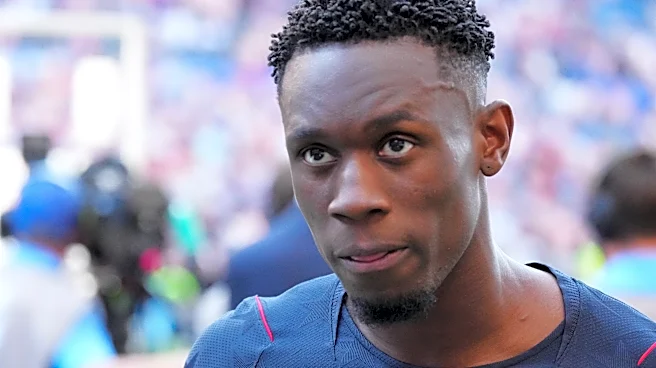
What's Happening?
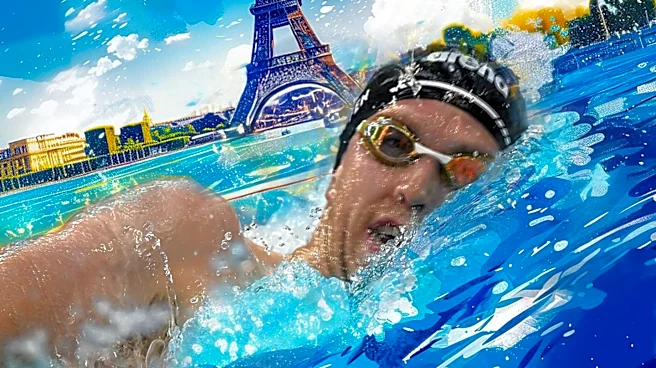
Léon Marchand, a quadruple Olympic champion swimmer, is currently facing significant criticism and accusations of racism and cowardice on social media. This backlash stems from his decision to refrain from taking a public political stance, citing that
he does not feel sufficiently informed or legitimate to do so. The controversy intensified after his appearance on France 2's 20 Heures news program, where he was questioned about the role of athletes in political debates, particularly in light of other French sports stars like Kylian Mbappé and Victor Wembanyama who have expressed political opinions. Marchand's measured response, emphasizing his desire to avoid speaking on subjects he doesn't fully master, has been met with a barrage of insults online, including being called 'cowardly,' 'privileged,' 'fascist,' and 'racist.' This situation highlights a growing pressure on high-profile athletes to engage in political discourse, even when they prefer to remain neutral.
Why It's Important?
This incident underscores a broader societal trend where public figures, especially athletes with significant platforms, are increasingly expected to voice political opinions. Marchand's experience illustrates the potential consequences of neutrality, as his decision not to engage politically has been interpreted by some as a political statement in itself, leading to severe personal attacks. This phenomenon can create a challenging environment for athletes, forcing them to navigate complex political landscapes that may be outside their expertise or comfort zone. The pressure to conform to political expectations can impact athletes' mental well-being and public image, potentially diverting attention from their athletic achievements. It also raises questions about the nature of public discourse and the demands placed on individuals in the public eye to align with specific ideologies, regardless of their personal convictions or knowledge on the subject.
What's Next?
The immediate future for Léon Marchand will likely involve continued scrutiny and public debate surrounding his stance. He may face ongoing pressure from various groups to either clarify his position or engage in political discussions. The incident could also prompt broader conversations within the sports community and media about the responsibilities and expectations placed on athletes regarding political engagement. Other athletes might observe Marchand's experience and adjust their own approaches to public statements, potentially leading to more cautious responses or, conversely, more vocal participation in political matters. The long-term impact on Marchand's public perception and career remains to be seen, but this event could serve as a precedent for how society and media react to athletes who choose neutrality in an increasingly politicized world.
Beyond the Headlines
The controversy surrounding Léon Marchand delves into deeper ethical and cultural dimensions concerning freedom of speech, the role of public figures, and the nature of online discourse. It highlights the tension between an individual's right to remain apolitical and societal expectations for influential figures to use their platform for social or political causes. The aggressive online reactions, including accusations of racism and cowardice, reveal the intensity and often unforgiving nature of social media, where nuanced positions can be easily distorted or condemned. This situation also touches upon the concept of 'cancel culture' and the rapid judgment that can befall individuals who do not align with prevailing social or political narratives. It prompts reflection on whether public figures should be compelled to adopt political stances and the implications for intellectual freedom and personal autonomy in an era of heightened political polarization.