









What's Happening?
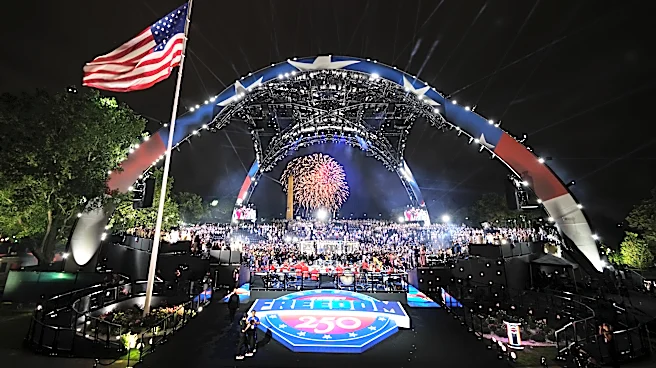
The UFC Freedom 250 event, held at the White House, attracted a record-breaking streaming audience of 17 million viewers across the United States and Latin America, as reported by Paramount+. The event, which took place on President Donald Trump's 80th
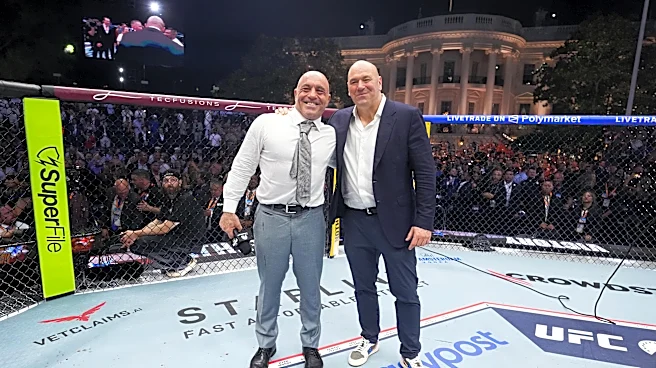
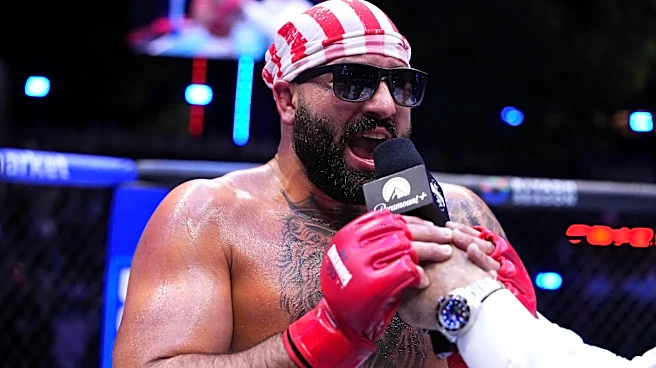
birthday, was part of the celebrations for the United States' 250th anniversary. The viewership was split with 15.26 million in the U.S. and 1.67 million in Latin America. The event featured a seven-bout card, including a main event where Justin Gaethje defeated Ilia Topuria. The event was notable for being the first in UFC history where every fight ended in a knockout or technical knockout. Despite the high viewership, the event was controversial due to its location on the South Lawn of the White House, requiring significant logistical arrangements, including a canopy and temporary seating.
Why It's Important?
The UFC Freedom 250 event highlights the growing popularity of mixed martial arts and the UFC brand, particularly in the U.S. and Latin America. The event's success on a streaming platform like Paramount+ underscores the shift in how audiences consume live sports, moving away from traditional cable to digital platforms. This trend could influence future broadcasting strategies for sports organizations. Additionally, the event's location at the White House and its association with President Trump may have political and cultural implications, reflecting the intersection of sports, politics, and media in contemporary society. The financial loss reported by UFC CEO Dana White, despite the high viewership, raises questions about the economic viability of such high-profile events.
What's Next?
UFC is expected to release viewership numbers for audiences outside the U.S. and Latin America, which could further demonstrate the global reach of the sport. The financial implications of the event, including the reported $30 million loss, may lead to strategic reassessments by the UFC regarding future events of similar scale and location. The controversy surrounding the event's location may prompt discussions about the appropriateness of using significant national landmarks for commercial sports events. Stakeholders, including political leaders and sports organizations, may weigh in on the broader implications of such events.