
What's Happening?
Kevin Hughes, Chief External Affairs Officer for Stack Americas, discussed the evolution and future of the data center industry, emphasizing its critical role in technological advancements. Hughes, who
began his career in data centers in 2009, highlighted how the industry, though often overlooked, underpins significant technological revolutions. He pointed to the Cleveland Clinic's successful implementation of AI and machine learning to improve sepsis detection, resulting in a tenfold decrease in false alerts, a 46% increase in identified cases, and a sevenfold increase in alerts before antibiotic administration. This application of AI, according to Hughes, saved thousands of lives by efficiently analyzing vast amounts of medical data, a task that would have been significantly more resource-intensive and time-consuming with traditional computing methods. He also noted the industry's philanthropic efforts, such as Stack Infrastructure's recent fundraiser for the U.S. Coast Guard Foundation, which raised over $2 million.
Why It's Important?
The insights from Kevin Hughes underscore the profound and often unseen impact of the data center industry on various sectors of the U.S. economy and society. The Cleveland Clinic's use of AI for sepsis detection exemplifies how advanced computing infrastructure can lead to tangible, life-saving improvements in healthcare, demonstrating a practical application of AI beyond speculative headlines. This efficiency not only saves lives but also optimizes resource allocation in medical institutions. Economically, the increased productivity driven by AI, as projected by the Wharton School of Business, suggests a permanent increase in GDP levels by 1.5% by 2035 and nearly 3% by 2055. This indicates that the data center industry and the AI it supports are not just facilitating growth but fundamentally reshaping economic activity and productivity across the nation. Furthermore, the industry's corporate philanthropy, as seen with Stack Infrastructure's support for the U.S. Coast Guard Foundation, highlights a commitment to community engagement and national welfare.
What's Next?
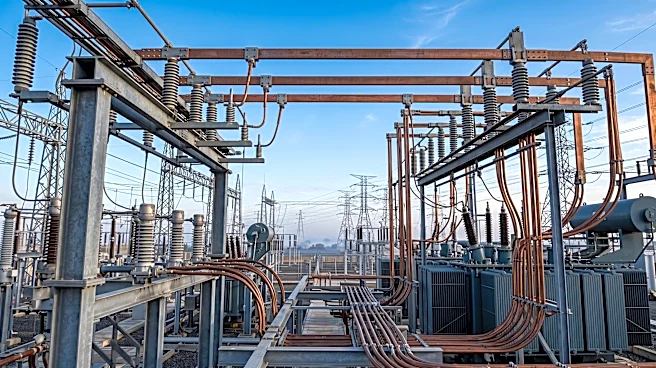
Looking ahead, the data center industry is poised to drive significant innovation in grid infrastructure. Hughes anticipates that the increasing demand for digital infrastructure will necessitate and accelerate investment in revitalizing the U.S.'s outdated and complex electrical grid. This demand is expected to spur technological advancements in grid utilization and optimization, including software solutions and improved management of existing assets. Examples like Portland Gas and Electric's collaboration with Grid Care, which identified nearly 400 megawatts of unutilized power, demonstrate the immediate potential for efficiency gains without new construction. This focus on grid modernization will not only support the growing needs of data centers but also enhance the resilience and efficiency of the national power infrastructure, benefiting all consumers and industries. The continued integration of AI into various sectors is also expected to lead to more real-world problem-solving applications, further boosting productivity and economic growth.
Beyond the Headlines
The narrative presented by Kevin Hughes delves into the less-publicized but crucial aspects of the technology revolution. While much attention is given to the transformative potential of AI, Hughes emphasizes the 'boring but important' applications that deliver immediate, impactful results, such as improved sepsis detection. This perspective challenges the common perception of AI as solely a futuristic or job-displacing technology, instead highlighting its role as a tool for enhancing human capabilities and solving complex societal problems. The discussion also touches upon the ethical and resource allocation dilemmas faced by institutions, where AI offers a cost-effective alternative to traditional methods, allowing for simultaneous progress in multiple critical areas. The industry's commitment to corporate philanthropy, exemplified by Stack Infrastructure's support for the U.S. Coast Guard, also reveals a broader sense of corporate responsibility that extends beyond technological innovation to community welfare and national security.