







What's Happening?
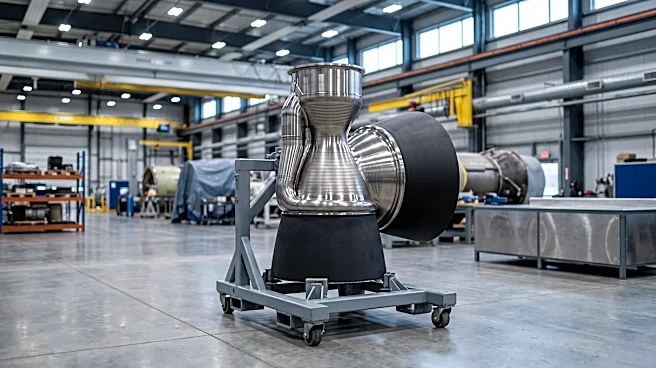
Relativity Space, an American aerospace manufacturer, is actively seeking a Technical Recruiter for its Cape Canaveral, Florida, and Stennis, Mississippi, locations. The company is developing its Terran R vehicle, a medium-to-heavy lift reusable rocket
designed to deliver customer payloads to orbit. This recruitment drive is part of Relativity Space's broader effort to expand its team and capabilities as it progresses towards commercial success with the Terran R. The Technical Recruiter will be responsible for full lifecycle recruiting, focusing on hardware technical roles within the Test & Launch teams. This role involves partnering with hiring managers, developing recruiting strategies, sourcing passive candidates, and ensuring a positive candidate experience. Successful candidates will need to clear a U.S. government background check for on-site work at the Cape Canaveral facility.
Why It's Important?
This hiring initiative by Relativity Space underscores the ongoing growth and demand within the U.S. commercial space sector. The development of the Terran R rocket is significant as it aims to reduce the cost and time associated with space launches through 3D printing technology and reusability. A successful Terran R could enhance U.S. capabilities in space exploration and satellite deployment, offering more competitive options for government and private sector payloads. The recruitment of specialized talent, particularly in hardware technical roles, is crucial for advancing these complex aerospace projects. The company's commitment to innovation and its strategic locations in Florida and Mississippi highlight the regional economic impact, creating high-tech job opportunities and fostering a skilled workforce in critical aerospace hubs.
What's Next?
Relativity Space will continue its recruitment efforts to fill key technical positions, which are essential for the ongoing development and eventual launch of the Terran R rocket. The successful integration of new talent will directly impact the project timelines and the company's ability to meet its commercial objectives. As the Terran R progresses, further testing and regulatory approvals will be required before its operational deployment. The company's growth in Cape Canaveral also suggests potential for increased infrastructure development and collaboration with other aerospace entities in the region. The long-term success of Terran R could lead to more frequent and cost-effective access to space, influencing future U.S. space policy and commercial ventures.
Beyond the Headlines
The emphasis on 3D printing technology in rocket manufacturing, as pioneered by Relativity Space, represents a significant paradigm shift in the aerospace industry. This approach not only promises cost and time efficiencies but also allows for greater design flexibility and rapid iteration, potentially accelerating the pace of innovation in rocket development. The demand for specialized technical talent, as evidenced by this recruitment, highlights a broader trend in the U.S. towards a highly skilled workforce in advanced manufacturing and engineering. Furthermore, the requirement for government security clearance for on-site work underscores the strategic importance of commercial space activities and the need to protect sensitive technologies and operations, reflecting the dual-use nature of many aerospace advancements.