





What's Happening?
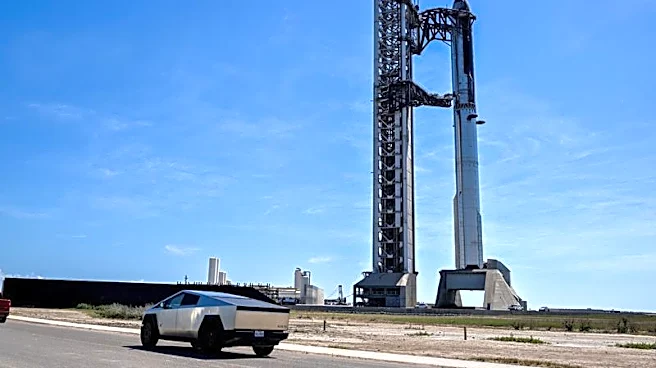
Tesla and SpaceX have initiated steps towards a potential merger, assembling special committees and enlisting investment banks to facilitate what could be a historic $3.5 trillion all-stock deal. Two directors from SpaceX, Roelof Botha and Randy Glein,
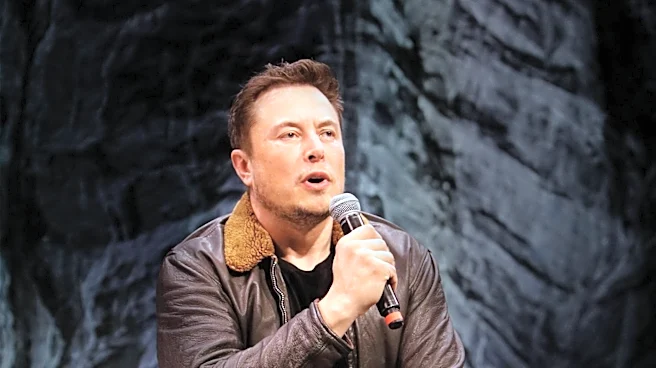
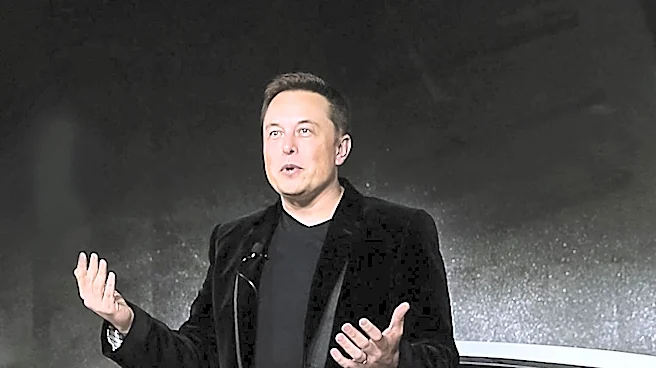
and three from Tesla, Robyn Denholm, Kathleen Wilson-Thompson, and Jack Hartung, have been appointed to oversee the merger discussions. These individuals, despite their long-standing ties to Elon Musk, CEO of both companies, have been deemed financially 'disinterested.' Morgan Stanley and Goldman Sachs are advising SpaceX, while Evercore is advising Tesla, with their primary task being to develop financial models for the proposed merger. The exchange ratio, which will determine the ownership structure of the combined entity, is still under negotiation. This merger could significantly increase Elon Musk's voting power beyond his current 20% in Tesla and 84% in SpaceX, potentially granting him majority control.
Why It's Important?
This potential merger holds immense significance for the technology and automotive industries, as it would combine two of Elon Musk's most prominent ventures into a single entity. The primary driver for this consolidation appears to be Musk's desire for greater voting power, which would grant him more latitude to pursue ambitious projects in AI and robotics without significant challenge from other shareholders. Such a move could centralize decision-making and accelerate the integration of technologies between the two companies, potentially leading to unprecedented innovations. However, it also raises concerns about corporate governance and the influence of a single individual over a massive, diversified enterprise. Existing shareholders of both Tesla and SpaceX stand to be significantly impacted by the exchange ratio and the new governance structure, which could either enhance or dilute their influence and investment value.
What's Next?
The special committees and investment banks are currently working on developing financial models and negotiating the exchange ratio for the proposed all-stock merger between Tesla and SpaceX. A deal could potentially be reached before the end of the year. Once an agreement on the exchange ratio and governance structure is finalized, it would then be subject to approval by shareholders of both companies. The outcome of these negotiations will determine the extent of Elon Musk's voting power in the combined entity, which could range from increased influence to outright majority control. The market will closely watch the terms of the deal, as it will have substantial implications for the valuation of both companies and the future direction of their respective industries, particularly in AI, robotics, electric vehicles, and space exploration.
Beyond the Headlines
The proposed merger between Tesla and SpaceX transcends a typical corporate consolidation; it represents a strategic move by Elon Musk to consolidate his vision and control over his technological empire. The pursuit of greater voting power highlights a broader trend among visionary founders to maintain significant influence over their companies' long-term direction, often clashing with traditional corporate governance models that emphasize shareholder democracy. This merger could create a unique conglomerate with unparalleled capabilities in diverse high-tech sectors, potentially accelerating advancements in areas like sustainable energy, autonomous systems, and space colonization. However, it also raises ethical and legal questions about the concentration of power in the hands of one individual and the potential for conflicts of interest, especially given Musk's existing leadership roles in both entities. The success or failure of this merger could redefine corporate structures in the 21st century.