



What's Happening?
The Buffalo Sabres are intentionally limiting season ticket sales to maintain flexibility for individual game and group sales, a strategy outlined by Pete Guelli, the team's president of business operations. This approach deviates from past practices
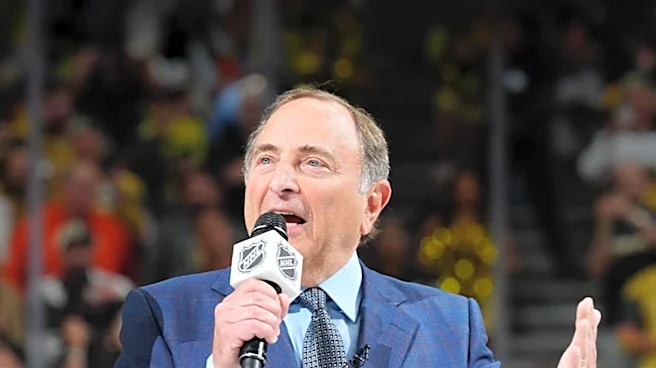
where teams aimed for near-capacity season ticket sales. Currently, approximately 10,000 of the Sabres' 14,000 season plans are full 42-game customers, with the remaining 4,000 equivalents built through partial plans like minipacks and half-seasons. Guelli emphasized that this model ensures continued access to the arena for various customer segments, which is crucial for building a sustainable foundation for the future, especially after 14 years of underperformance that led to a 'lost generation' of hockey fans in the market. NHL Commissioner Gary Bettman has consistently expressed belief in the Pegulas' ownership and the market's potential to respond positively to a winning team.
Why It's Important?
This strategic shift in ticket sales by the Sabres highlights a broader evolution in sports business models, moving away from maximizing immediate season ticket revenue towards a more diversified and long-term fan engagement strategy. By not selling out all season tickets, the team can cater to a wider audience, including casual fans, tourists, and corporate groups, through individual game and group sales. This flexibility is vital for rebuilding a fan base that has been disengaged due to prolonged team futility. It allows the Sabres to attract new fans and re-engage old ones who might be hesitant to commit to a full season but are willing to attend occasional games. This approach could lead to more consistent attendance, increased merchandise sales, and greater overall revenue stability, fostering a healthier economic environment for the franchise and potentially influencing other sports organizations facing similar challenges.
What's Next?
The Sabres will continue to implement this flexible ticket sales model, closely monitoring its impact on attendance, fan engagement, and revenue. The success of this strategy will likely depend on the team's on-ice performance, as a winning product is expected to naturally draw more fans back to the arena. The organization will likely focus on targeted marketing campaigns for individual and group ticket sales, leveraging the team's improved performance to attract diverse customer segments. Other NHL teams and professional sports franchises may observe the outcomes of this strategy, potentially adopting similar approaches if it proves effective in rebuilding fan bases and ensuring long-term financial health. The team's ability to convert casual attendees into more committed fans through positive game-day experiences will be a key indicator of the strategy's success.
Beyond the Headlines
The Sabres' ticketing strategy reflects a deeper understanding of modern consumer behavior and the need for adaptability in the sports entertainment industry. In an era where streaming and diverse entertainment options compete for consumer attention, traditional season ticket models can be restrictive. By offering more flexible options, the Sabres are acknowledging the changing preferences of their audience and attempting to lower the barrier to entry for new fans. This move also has cultural implications, as it seeks to revitalize a community's connection to its sports team after a period of disillusionment. The 'lost generation' of fans represents a significant challenge, and this strategy is an attempt to bridge that gap, fostering a renewed sense of community and shared experience around the team. It underscores the idea that sustained engagement, rather than just maximizing immediate sales, is crucial for the long-term viability and cultural relevance of a sports franchise.