





What's Happening?
Newegg Commerce, Inc. (NASDAQ: NEGG), a global technology e-commerce retailer, announced its financial results for the third quarter ended September 30, 2026. The company reported a 15.0% year-over-year increase in net sales, reaching $341.7 million,
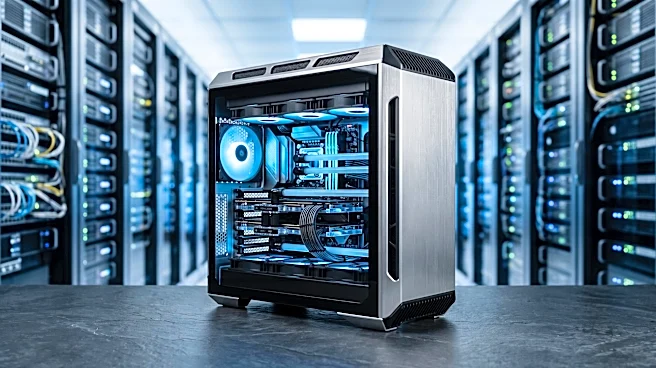
and a 14.9% increase in Gross Merchandise Value (GMV) to $421.7 million. This growth occurred despite industry-wide memory and storage shortages, which also impacted graphics card prices and supply. Newegg's strategic inventory positioning allowed it to maintain product availability and create compelling bundles for customers. The company also achieved a net income of $4.0 million, a significant improvement from an $8.8 million net loss in the same period last year, and an Adjusted EBITDA of $6.2 million, up from a $1.0 million loss. Newegg expanded its AI-powered shopping features, including its native AI shopping assistant 'Ask Celeste™' and integrations with ChatGPT, Perplexity, Google Search, and the Gemini app for in-conversation checkout. Additionally, Newegg Business is assisting IT teams with AI planning, offering servers, storage, and workstations for AI workloads.
Why It's Important?
Newegg's strong third-quarter performance highlights the resilience of the e-commerce technology sector, particularly in the face of supply chain challenges. The increased demand for AI-related hardware, such as memory, storage, and graphics cards, is a significant driver for the company's growth. This trend indicates a broader shift in the technology market, where AI infrastructure is becoming a critical component for both consumer and business customers. Newegg's ability to secure inventory in constrained categories and leverage it for profitable growth demonstrates effective supply chain management and market responsiveness. The expansion of AI-powered shopping features also signifies the growing importance of artificial intelligence in enhancing the customer experience and streamlining online retail. For U.S. consumers and businesses, Newegg's offerings in AI-powered hardware and shopping tools contribute to the accessibility and adoption of advanced technology, potentially boosting productivity and innovation across various sectors.
What's Next?
Newegg anticipates that memory and storage pricing will remain elevated through the end of the year, and the company plans to continue building inventory in categories where supply is expected to tighten. Heading into the Black November and holiday shopping season, Newegg will focus on disciplined execution, expanding its market share in core categories, and delivering long-term value to its customers, partners, and shareholders. The company recently secured a new $100 million senior credit facility, which will provide additional capacity to invest in long-term growth and manage inventory constraints. Newegg also aims to further extend its reach to additional AI platforms and the next generation of AI PCs, indicating a continued strategic focus on the artificial intelligence market. This suggests ongoing innovation in AI-powered shopping experiences and a commitment to providing cutting-edge hardware solutions for both individual and enterprise clients.
Beyond the Headlines
The reported growth in Newegg's AI-powered shopping features and its focus on AI hardware for business customers point to a deeper integration of artificial intelligence into everyday commerce and enterprise operations. The collaboration with platforms like ChatGPT, Perplexity, Google Search, and the Gemini app for in-conversation checkout signifies a move towards more seamless and intuitive online shopping experiences, potentially setting new industry standards for e-commerce. This trend could lead to increased consumer reliance on AI assistants for product recommendations and compatibility checks, transforming how individuals interact with online retailers. For businesses, Newegg Business's role in helping IT teams plan for AI workloads underscores the critical need for robust AI infrastructure to support emerging technologies and data-intensive applications. This development has implications for the broader U.S. technology landscape, as it fosters the adoption of AI and drives demand for specialized hardware, potentially accelerating technological advancements and economic growth in the AI sector.