


What's Happening?
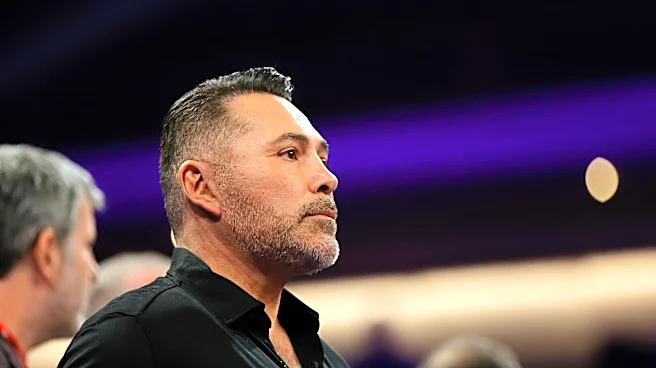
Oscar De La Hoya, Chairman and CEO of Golden Boy Promotions, has asserted that boxing is currently in its 'worst place' in history, despite recent efforts to stage high-profile fights. Speaking to Ariel Helwani, De La Hoya criticized top fighters for prioritizing
large purses over consistent competition, stating, 'All these top guys are waiting for that ultimate purse.' He emphasized the need for fighters to 'fight, prove yourself, become a world champion and continue your career' rather than remaining idle. While acknowledging that figures like Turki Alalshikh and Riyadh Season have facilitated some major matchups, such as Tyson Fury vs. Oleksandr Usyk and Artur Beterbiev vs. Dmitry Bivol, De La Hoya believes these 'sprinkles of a handful of fights' are insufficient to sustain the sport year-round. He argues that boxing needs a continuous stream of competitive bouts, not just occasional blockbusters, to thrive.
Why It's Important?
Oscar De La Hoya's critique from a prominent figure within the boxing industry highlights a significant challenge facing the sport: the balance between financial incentives and competitive integrity. His comments suggest that the pursuit of 'ultimate purses' by elite fighters is leading to fewer consistent matchups between the best, potentially alienating fans who desire more frequent, high-quality contests. This trend could negatively impact boxing's long-term growth and popularity, as sporadic big fights may not be enough to maintain a dedicated fanbase or attract new audiences. The reliance on external financial backing, such as that provided by Turki Alalshikh, while enabling some major events, also raises questions about the sport's self-sustainability and whether it fosters a culture where fighters and promoters are less inclined to make fights without extraordinary financial guarantees. This situation affects promoters, broadcasters, and ultimately, the fans who want to see the best fight the best regularly.
What's Next?
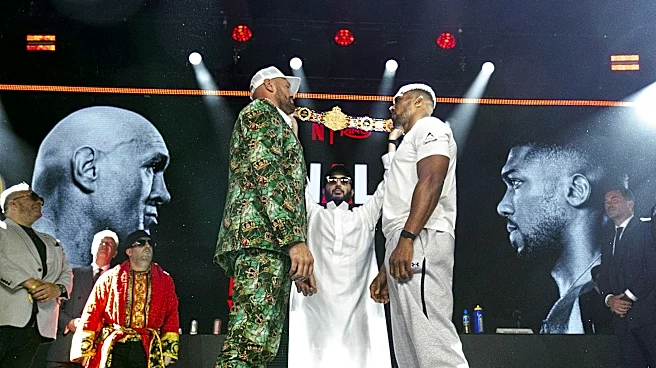
De La Hoya's comments suggest a need for a fundamental shift in the boxing landscape, urging fighters to prioritize competition and career progression over solely waiting for the largest paydays. While major fights like the upcoming Anthony Joshua vs. Tyson Fury bout continue to be made, the challenge remains to create a more consistent schedule of compelling matchups throughout the year. This could involve promoters working more collaboratively, fighters being more willing to take risks, and potentially a re-evaluation of how championship obligations are enforced. The ongoing discussion about Turki Alalshikh's long-term involvement in boxing also adds uncertainty, as his financial backing has been crucial for many recent high-profile events. Without a sustained effort to address the issues raised by De La Hoya, boxing may continue to struggle with maintaining consistent fan engagement and developing a robust, year-round competitive calendar.
Beyond the Headlines
De La Hoya's assessment delves into the deeper structural issues within professional boxing, particularly the fragmentation of the sport across various promoters, networks, and sanctioning bodies. This fragmentation often makes it difficult to arrange fights between top contenders who are aligned with different entities, leading to a 'business-versus-mandatory' dilemma where championship obligations clash with financial priorities. The influence of significant external funding, while beneficial for specific events, can also inadvertently inflate fighter expectations for purses, making it harder to negotiate fights that don't offer unprecedented financial rewards. This creates a cycle where fewer fights are made, and the sport's overall health suffers. De La Hoya's long-standing criticism, including his opposition to Saudi-backed spending and certain matchmaking decisions, underscores a concern that short-term financial gains might be overshadowing the long-term development and competitive integrity of boxing.