




What's Happening?
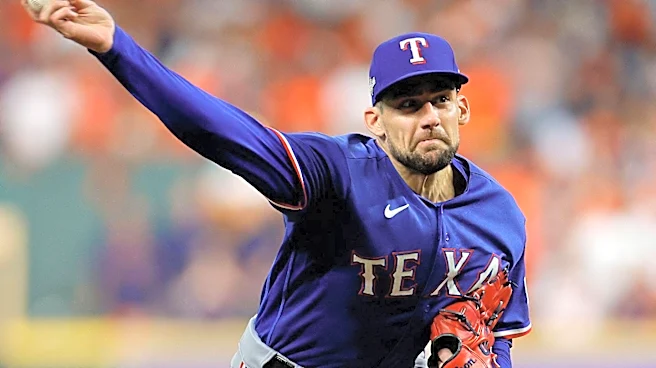
The Texas Rangers are facing a critical offseason as the team's president of baseball operations, Chris Young, is reportedly preparing to entertain trade discussions involving some of the club's highest-paid veterans. This development comes as ownership
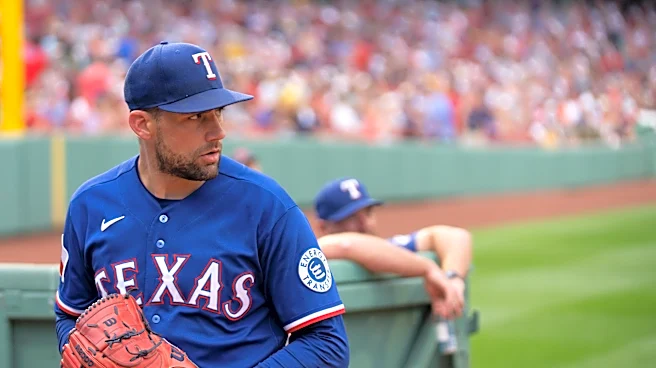
intends to maintain the team's payroll near its 2026 figure of $193 million for the upcoming 2027 season, limiting financial flexibility. Among the players who could be available for trade are shortstop Corey Seager, starting pitcher Jacob deGrom, and pitcher Nathan Eovaldi. Seager is owed approximately $155 million over the next five seasons and is coming off a disappointing 2026 season, which concluded with surgery in October. His contract also includes a no-trade clause, requiring his approval for any move. DeGrom is owed $37 million in 2027 with a potential option for an additional season, and he previously rejected a trade to Atlanta. Eovaldi, who will make $24 million in 2027, also possesses full no-trade protection. The Rangers are navigating a complex situation where financial commitments are complicating efforts to build a competitive team for the future.
Why It's Important?
This potential shift in strategy for the Texas Rangers carries significant implications for the team's competitive outlook and the broader MLB landscape. Trading star players like Corey Seager and Jacob deGrom, who were instrumental in the franchise's first World Series championship, signals a potential rebuilding phase or a strategic pivot to manage long-term financial health. For the Rangers, maintaining a static payroll while aiming to improve a team that has missed the postseason for three consecutive years presents a significant challenge. Such moves could free up substantial salary space, allowing the team to address other roster weaknesses, such as catcher depth, outfield needs following Evan Carter's hip surgery, and bullpen reconstruction. However, it also means surrendering proven talent, which could impact immediate competitiveness. For other MLB teams, these players represent high-value trade targets, potentially altering the competitive balance in both leagues. The financial complexities, including large contracts and no-trade clauses, highlight the intricate balance between player value, team budget, and long-term strategic planning in professional sports.
What's Next?
The Texas Rangers' front office, led by Chris Young, will be actively gathering intelligence on free agents and trade targets during the upcoming GM Meetings. While there is no mandate to trade any specific player, the organization will consider moving established veterans if such deals improve the franchise's future prospects. The team needs to address several key areas, including catcher depth, as Kyle Higashioka's options were declined, leaving only Danny Jansen and Logan O’Hoppe. The outfield also requires attention, especially after center fielder Evan Carter's hip surgery, which will likely sideline him for the start of the next season. Rebuilding the bullpen from scratch for the third consecutive offseason remains a primary focus. The Rangers will explore various avenues, including trades and free agency, to acquire relief pitchers. The decisions made regarding potential trades of high-salary players will directly influence the team's ability to fill these roster gaps and shape their competitive strategy for the 2027 season and beyond.
Beyond the Headlines
The Texas Rangers' current predicament reflects a broader trend in professional sports where the pursuit of championships often leads to significant financial commitments that can later constrain future team building. The decision to potentially trade star players, even those who delivered a championship, underscores the transient nature of team rosters and the constant pressure to balance immediate success with long-term sustainability. The challenge for Chris Young is not just about managing a budget but also about maintaining fan engagement and player morale during a period of potential transition. The impact of such moves extends beyond the field, affecting team culture and the perception of the franchise. Furthermore, the presence of no-trade clauses in player contracts highlights the increasing power of athletes in shaping their careers, adding another layer of complexity to trade negotiations. This situation exemplifies the intricate interplay of financial management, player relations, and strategic foresight required to navigate the competitive landscape of professional baseball.