





What's Happening?
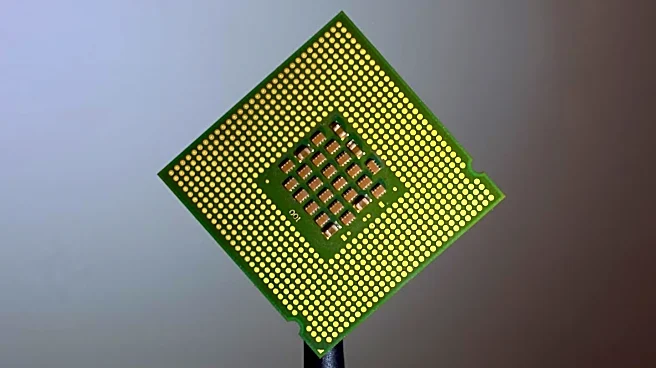
The Novo Nordisk Foundation, in collaboration with Quantum Foundry Copenhagen, has announced plans to establish a 5,300 square meter quantum chip fabrication facility in Copenhagen, Denmark. This state-of-the-art facility is slated to open in 2027 and
aims to strengthen Europe's capabilities in designing, manufacturing, and scaling next-generation quantum chips. The initiative is part of a broader commitment by the Novo Nordisk Foundation, which has allocated over DKK 2.9 billion (EUR 390 million) to quantum technologies, including the Novo Nordisk Foundation Quantum Computing Programme at the Niels Bohr Institute, University of Copenhagen. The facility will uniquely combine laboratory space for nanofabrication of quantum materials, advanced characterization, testing, chip assembly, and packaging with ultra-high vacuum manufacturing capabilities. It will offer wafer fabrication services to quantum technology vendors globally on commercial terms, bridging the gap between academic research and industrial manufacturing.
Why It's Important?
This development is crucial for Europe's technological sovereignty and competitiveness in the global quantum landscape. While Europe has a strong foundation in quantum science research, there has been a recognized need to translate these scientific breakthroughs into industrial capabilities and commercial products. The new facility addresses this bottleneck by providing the necessary infrastructure for high-quality quantum chip fabrication, which is a critical component for developing functional quantum computers. By strengthening the European supply chain for quantum chips, the initiative aims to reduce reliance on external sources and foster a robust domestic quantum industry. This investment is expected to accelerate the development of quantum technologies, which have the potential to revolutionize various sectors, including healthcare, energy systems, and cybersecurity, by solving complex problems beyond the scope of current supercomputers.
What's Next?
The Quantum Foundry Copenhagen facility is expected to become operational in 2027. Following its opening, the facility will begin offering commercial wafer fabrication, characterization, assembly, and packaging services to quantum technology vendors worldwide. This will enable quantum companies to scale production and bring advanced quantum computing processors to market. The initiative is also closely linked to the Novo Nordisk Foundation Quantum Computing Programme, which aims to develop Denmark's first fully functional fault-tolerant quantum computer before 2034. The success of this facility will be measured by its ability to produce chips that quantum companies actively purchase, thereby solidifying Europe's position as a leader in quantum technology manufacturing. Political leaders, businesses, and civil society groups will likely monitor the progress of this facility as a benchmark for Europe's commitment to technological independence and innovation.
Beyond the Headlines
The establishment of Quantum Foundry Copenhagen highlights a significant shift in how philanthropic organizations, particularly those with substantial financial backing from successful industries like pharmaceuticals, are investing in cutting-edge technologies. The Novo Nordisk Foundation, traditionally known for its contributions to health and science, is leveraging its wealth, partly generated from obesity drugs, to fund long-term, high-risk, high-reward ventures in quantum computing. This approach contrasts with traditional venture capital models that often seek faster returns. It underscores a recognition that foundational technologies like quantum computing require sustained, patient capital and integrated infrastructure to move from theoretical research to industrial application. This model could serve as a blueprint for other regions or foundations looking to foster deep-tech ecosystems, emphasizing the importance of bridging the gap between scientific excellence and industrial capability to achieve technological sovereignty and address global challenges.