



What's Happening?
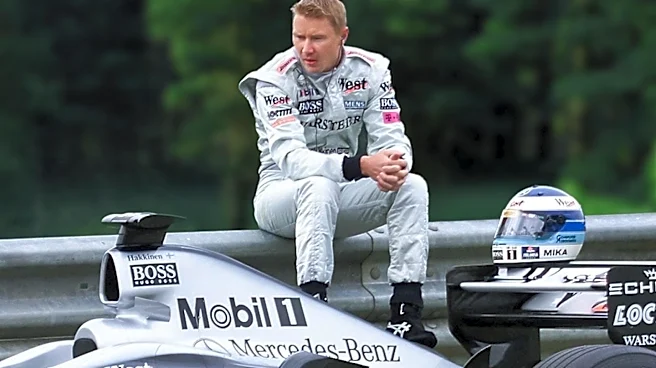
On September 14, 2001, two-time Formula 1 World Champion Mika Häkkinen announced his decision to take a sabbatical from the sport after the conclusion of the season. This announcement led to fellow Finnish driver Kimi Räikkönen moving from Sauber to fill
Häkkinen's seat at McLaren. Häkkinen, who had secured two Drivers’ Championships, 20 victories, and 26 pole positions during his career, ultimately did not return to Formula 1 after his sabbatical. This driver market shift was a significant event in the sport, impacting team lineups and future championship dynamics. The same date also marked other notable moments in Formula 1 history, including Gilles Villeneuve's crash at the 1980 Italian Grand Prix and Sebastian Vettel becoming the youngest pole-sitter and Grand Prix winner at the time in 2008.
Why It's Important?
The departure of a two-time World Champion like Mika Häkkinen from Formula 1, even if initially termed a sabbatical, had a profound impact on the sport's competitive landscape. His absence created a vacancy at a top-tier team like McLaren, leading to the promotion of Kimi Räikkönen, who would later go on to become a World Champion himself. This move underscored the continuous cycle of talent in Formula 1, where established stars make way for emerging ones. For McLaren, securing Räikkönen was crucial for maintaining their competitive edge. The event also highlights the high-stakes nature of driver contracts and team strategies in Formula 1, where decisions can reshape team fortunes and driver careers for years to come. The historical context provided by other events on the same date further emphasizes the sport's rich and often dramatic history.
What's Next?
Following Mika Häkkinen's announcement, the immediate next step was Kimi Räikkönen's transition to McLaren for the subsequent Formula 1 season. This move would place Räikkönen in a prominent role, with expectations to continue McLaren's competitive performance. For McLaren, the focus would shift to integrating Räikkönen into the team and developing their car for future championships. The long-term consequence was Häkkinen's permanent retirement from the sport, solidifying his legacy as a two-time champion. The event also set the stage for Räikkönen's successful career at McLaren and later Ferrari, demonstrating how such driver changes can influence the trajectory of multiple careers and team dynamics for over a decade.
Beyond the Headlines
Mika Häkkinen's decision to step away from Formula 1, despite being at the peak of his career, highlights the immense physical and mental demands placed on elite athletes in motorsports. The concept of a 'sabbatical' in such a high-pressure environment often signals a deeper need for respite or a re-evaluation of personal priorities, which can resonate with broader discussions about athlete well-being. His eventual non-return underscores the difficulty of re-entering such a competitive field after a break. Furthermore, the seamless transition of Kimi Räikkönen into his seat at McLaren illustrates the relentless nature of Formula 1, where opportunities are quickly seized, and the sport continues to evolve with new talent. This event also contributes to the narrative of driver legacies and how champions choose to conclude their careers, influencing how they are remembered in the annals of motorsport history.