







What's Happening?
New research from the Norwegian University of Science and Technology indicates that just 30 minutes of high-intensity exercise per week can significantly benefit heart health. This finding challenges the U.S. physical activity guidelines, which recommend
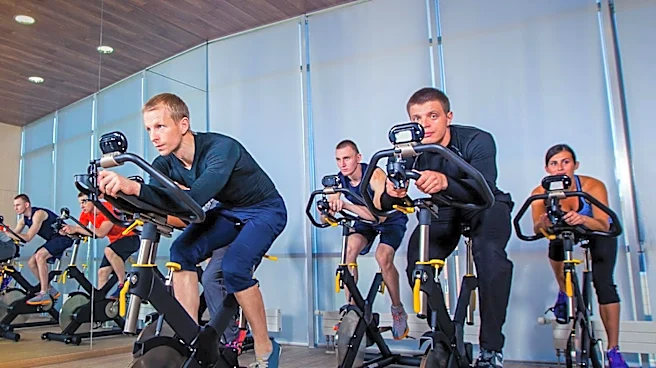
at least 150 minutes of moderate-intensity exercise or 75 minutes of vigorous-intensity exercise weekly, along with two days of strength training. The study suggests that for those who engage in high-intensity workouts, a much shorter duration can still yield positive health outcomes. High-intensity exercise is defined as activity that elevates the heart rate to at least 85% of its maximum, making comfortable conversation difficult but allowing for short sentences. Examples include spin classes, running, or singles tennis. Experts recommend splitting this 30 minutes across the week, such as 7.5 minutes four times a week, to maximize benefits like blood pressure and blood sugar control, which occur for one to two days post-exercise. Dr. Jason Tso, a cardiologist at Stanford University School of Medicine, noted that even small amounts of vigorous activity can improve cardiovascular fitness and reduce risk factors for sedentary individuals.
Why It's Important?
This research is important because it offers a potentially more accessible pathway to improved cardiovascular health for the less than 25% of Americans who currently meet national physical activity guidelines. The demanding nature of modern life often makes it difficult for individuals to commit to longer workout sessions. By demonstrating that a significantly shorter duration of high-intensity exercise can be effective, the study could encourage more people to incorporate physical activity into their routines. This could lead to a reduction in sedentary lifestyles, which are linked to increased risks of insulin resistance, type 2 diabetes, and cardiovascular diseases. While high-intensity exercise is time-efficient and burns more calories, it is also challenging and may not be suitable for everyone, especially those with pre-existing health conditions. Therefore, consulting a clinician before starting an intense exercise regimen is crucial, particularly for inactive individuals or those with risk factors like high blood pressure, diabetes, or a family history of heart disease. The findings highlight that 'doing something' is better than nothing, potentially shifting public health messaging to emphasize achievable, impactful exercise goals.
What's Next?
Further research is needed to compare the benefits of short, high-intensity exercise with those of longer physical activity durations. While this study provides promising insights, experts like Dr. Sawalla Guseh, director of the Cardiovascular Performance Program in the Mass General Brigham Heart and Vascular Institute, caution against viewing 30 minutes per week as the ultimate goal, emphasizing that more regular physical activity generally provides greater cardiovascular benefit up to a point. The study's findings may prompt a reevaluation of current exercise recommendations or lead to more nuanced guidelines that consider intensity alongside duration. Public health campaigns might begin to promote shorter, more intense bursts of activity as a viable option for individuals struggling to meet existing guidelines. Additionally, healthcare providers may increasingly advise patients on incorporating high-intensity exercise, tailored to their fitness levels and health status, as a means to improve cardiovascular health. The focus will likely remain on encouraging consistent, sustainable exercise habits, regardless of the specific duration or intensity, to combat the widespread issue of physical inactivity.
Beyond the Headlines
The deeper implication of this research lies in its potential to democratize exercise and redefine perceptions of what constitutes an effective workout. For many, the perceived barrier to exercise is the time commitment, leading to inaction. This study suggests that even brief, vigorous efforts can be profoundly beneficial, potentially reducing feelings of guilt or inadequacy associated with not meeting traditional exercise benchmarks. This shift could foster a more inclusive approach to physical activity, where individuals are encouraged to find what works for them, rather than adhering to a rigid, one-size-fits-all model. Ethically, it underscores the importance of personalized health advice, as the suitability of high-intensity exercise varies greatly among individuals. It also highlights the ongoing evolution of scientific understanding regarding optimal health practices, reminding us that established guidelines can be refined with new evidence. Culturally, it could contribute to a broader acceptance of diverse forms of physical activity, moving beyond the traditional gym-centric view of exercise to embrace any movement that elevates heart rate and challenges the body, thereby integrating health more seamlessly into daily life.