




What's Happening?
Sandisk (NASDAQ:SNDK) has experienced significant volatility in its stock performance, despite a period of rapid growth driven by demand for its NAND flash memory products. After being spun off by Western Digital in February of the previous year, the stock surged
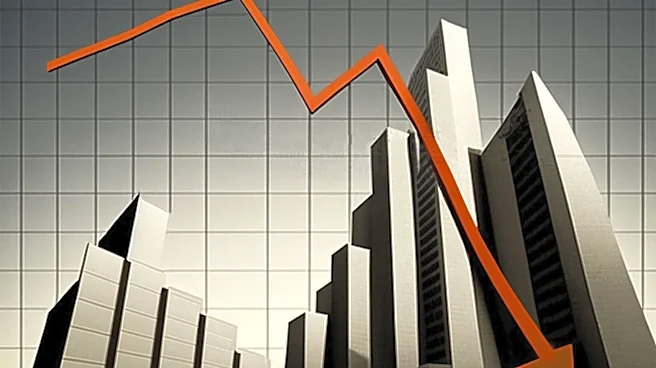
by as much as 6,400%. However, it has since seen a dramatic downturn, falling over 70% from its peak. This volatility occurred even as Sandisk management initiated an 8-for-1 stock split. The company specializes in NAND, a non-volatile memory used for long-term storage and solid-state drives, operating in a highly volatile segment of the tech industry. The rapid construction of AI data centers has created a severe shortage of the memory types Sandisk supplies, leading to strong pricing power, soaring revenues, and wide profit margins. Despite these positive factors, the stock's recent performance has raised questions about its future stability.
Why It's Important?
The extreme volatility of Sandisk's stock, despite its critical role in supplying memory for the booming AI industry, highlights the inherent risks and opportunities within the semiconductor sector. The company's strong pricing power and revenue growth underscore the current high demand for specialized memory, which is essential for the expansion of AI data centers and other advanced technologies. This demand directly impacts the U.S. technology landscape, as Sandisk's products are fundamental components for numerous tech companies. However, the memory chip market is characterized by its commoditized nature, meaning prices are highly sensitive to supply and demand. This makes companies like Sandisk vulnerable to market corrections once supply catches up, potentially leading to a significant loss of pricing power. Investors and industry observers are closely watching whether the current AI-driven boom can sustain itself or if it will lead to another cycle of oversupply and price declines.
What's Next?
Analysts predict Sandisk's stock could reach the $170-per-share range by the end of 2027, reflecting continued growth expectations. However, this projection comes with significant caveats due to the inherent volatility of the memory market. Headwinds in the AI industry are emerging, with investors questioning the sustainability of current capital expenditures amidst rising interest rates. If capital becomes scarcer, the pace of AI build-out could slow, directly impacting demand for Sandisk's products. The company's current valuation of approximately 5 times earnings, while seemingly low, is viewed cautiously by memory stock investors who understand that revenues and profits can reverse dramatically during industry downturns. The challenge for Sandisk will be to navigate these market dynamics and maintain its competitive edge as the supply-demand balance in the memory sector evolves.
Beyond the Headlines
The situation with Sandisk exemplifies a broader dilemma in the high-growth technology sectors, particularly those tied to emerging trends like AI. While the initial surge in demand can lead to unprecedented growth and profitability, the underlying commoditization of certain components, like memory chips, creates a precarious long-term outlook. This raises ethical and strategic questions for companies about how to diversify, innovate, and build sustainable competitive advantages beyond temporary market shortages. For investors, it underscores the importance of understanding industry cycles and not solely relying on current earnings multiples, which can be misleading in volatile markets. The potential for a slowdown in AI capital expenditures due to rising interest rates also highlights the interconnectedness of technological advancement with broader macroeconomic conditions, demonstrating how financial policies can directly influence the pace of innovation and industry growth.