







What's Happening?
The Kellogg's plant in Omaha, Nebraska, is scheduled to lay off its remaining employees by August 18, 2026, as it proceeds with its planned closure. This final round of layoffs will affect approximately 350 employees, following an earlier reduction of 100
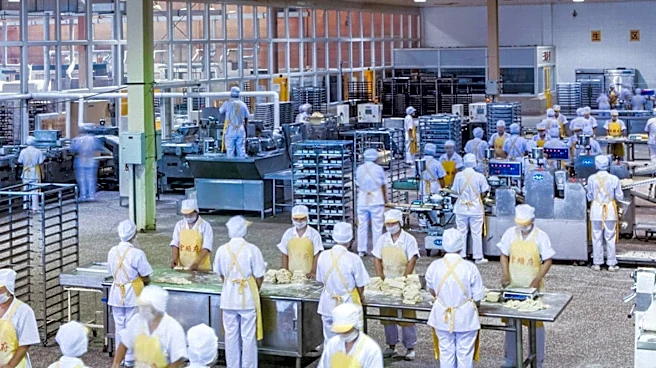
employees between July 6 and July 20. The company had announced its commitment to modernize its supply chain in August 2024, which included the decision to close the Omaha plant. Production has already ceased, and the facility is now entering a decommissioning phase, with the building slated for sale. The plant has been operational for over 60 years in the southwest Omaha area. Kellogg's stated that it is providing severance payments to affected union and nonunion workers and is committed to supporting them through the transition.
Why It's Important?
The closure of the Kellogg's Omaha plant marks the end of a significant era for the local economy and workforce. With approximately 450 employees losing their jobs, the impact on individual families and the broader Omaha community will be substantial. This event highlights the ongoing trend of corporate restructuring and supply chain modernization, where companies prioritize efficiency and investment in new technologies, often at the expense of older facilities and their workforces. The loss of a major employer like Kellogg's can lead to a ripple effect, affecting local businesses that relied on the plant's operations and its employees' spending power. It also underscores the challenges faced by communities dependent on single industries or large employers, emphasizing the need for economic diversification and robust support systems for displaced workers. The company's decision to invest in other plants while closing the Omaha facility reflects a strategic shift in its manufacturing footprint.
What's Next?
The Kellogg's Omaha plant will complete its decommissioning process, and the building will be listed for sale. The affected employees will receive severance payments, and the company has stated its commitment to supporting them through the transition, though specific details of this support beyond severance were not provided in the source. The local community will likely face the challenge of absorbing a significant number of displaced workers into the job market. Efforts may be made by local economic development agencies to attract new businesses to the area or to retrain the workforce for other industries. The closure could also lead to a re-evaluation of economic development strategies in Omaha to prevent similar impacts from future corporate decisions. The sale of the plant building will determine its future use and potential for new economic activity in the area.
Beyond the Headlines
The closure of the Kellogg's Omaha plant is more than just an economic event; it represents a profound social and cultural shift for the community. For over six decades, the plant was a source of stable employment and a cornerstone of many families' livelihoods. The loss of such an institution can lead to a decline in community morale, a sense of displacement, and the erosion of a shared identity tied to the plant. The decision to modernize the supply chain, while economically rational for the company, highlights the human cost of industrial evolution and automation. It raises questions about corporate responsibility to long-standing communities and the adequacy of support systems for workers in an increasingly dynamic global economy. The experience of Omaha's Kellogg's workers could serve as a case study for understanding the broader implications of deindustrialization and the challenges of economic transition in the U.S.