






What's Happening?
The Carolina Panthers are embarking on a significant $1.3 billion transformation of Bank of America Stadium, with the initial phases set to commence after the current NFL season concludes. This extensive project aims to upgrade nearly every aspect of the 30-year-old
venue, including replacing all seats, installing new scoreboards, renovating concourses, and enhancing luxury suites and club areas. Additionally, a new practice facility is slated to open next year, and a 4,400-capacity music venue will be built adjacent to the stadium by 2029. Panthers executives are referring to this as a "transformation" rather than a "renovation" to emphasize the comprehensive nature of the upgrades. The project will reduce the stadium's 75,000-seat capacity, and some season-ticket holders will need to relocate, though specific numbers are yet to be announced. Both the Panthers and Charlotte FC will continue to play home games at the stadium throughout the construction period.
Why It's Important?
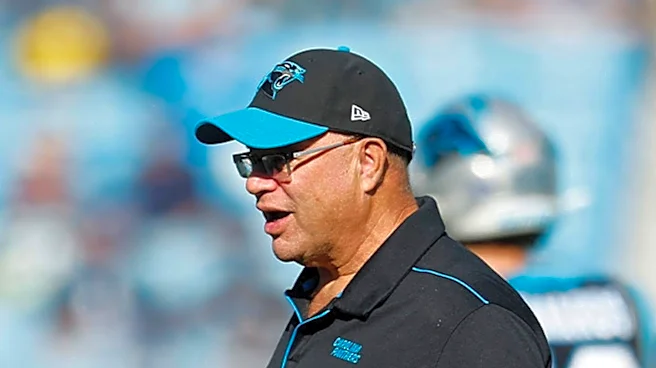
This massive investment in Bank of America Stadium is critical for the Carolina Panthers' long-term viability and competitiveness, both on and off the field. Modernizing the venue is essential for attracting major NFL events like the Draft and potentially a Super Bowl, which would bring significant economic benefits to Charlotte and enhance the team's national profile. The upgrades are also designed to improve the fan experience, which is crucial for maintaining season ticket sales and overall engagement. For the city of Charlotte, securing such events could boost tourism, local businesses, and civic pride. The project's funding structure, with $650 million from public funds and the remainder plus overruns covered by owner David Tepper, highlights the significant public-private partnerships often involved in large-scale sports infrastructure developments. This investment signals a commitment to the franchise's future in Carolina, despite recent on-field struggles.
What's Next?
The first phases of the $1.3 billion stadium transformation will begin immediately after the current NFL season. Fans can expect to see visible changes and potential disruptions during construction, although the teams will continue to play home games at Bank of America Stadium. The Panthers organization will need to manage the logistical challenges of construction while maintaining a positive fan experience. The focus will also be on securing future major events, with the NFL Draft being a more immediate possibility than a Super Bowl, which is targeted for 2031 after the renovation's completion. The team will also need to address the relocation of some season-ticket holders and communicate these changes effectively. The success of this transformation will be measured not only by the physical upgrades but also by its ability to attract high-profile events and improve the team's overall standing.
Beyond the Headlines
The stadium transformation project reflects a broader trend in professional sports where franchises are investing heavily in state-of-the-art facilities to create multi-purpose entertainment venues. This goes beyond just football, with the inclusion of a music venue, indicating a strategy to diversify revenue streams and make the stadium a year-round destination. The project also underscores the ongoing debate about public funding for private sports facilities, with $650 million coming from public sources. This raises questions about the economic impact and return on investment for taxpayers, as well as the balance between public benefit and private profit. The Panthers' decision to call it a "transformation" rather than a "renovation" also speaks to the evolving language and marketing strategies used to frame such large-scale developments, aiming to convey a sense of complete renewal rather than just an update.