







What's Happening?
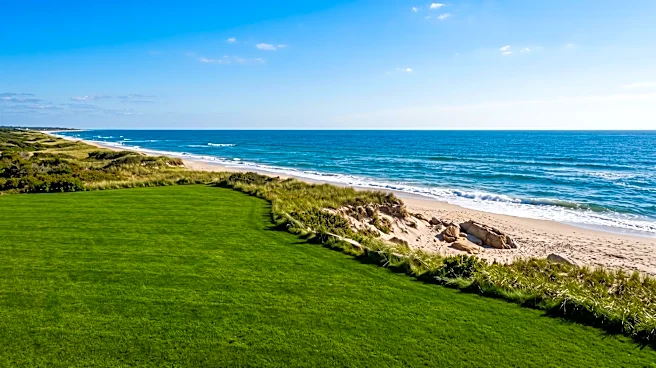
In some of the most exclusive U.S. real estate markets, ultra-wealthy individuals are purchasing multi-million dollar mansions only to immediately demolish them. This trend is driven by a desire for prime land locations, such as oceanfront or mountaintop
properties, which are considered irreplaceable, unlike the existing structures on them. An example cited is cosmetics billionaire William P. Lauder, who bought Rush Limbaugh's Palm Beach estate for $155 million in 2023 and razed the 24,000-square-foot home within months. This practice is not confined to Palm Beach, with similar instances reported in Houston suburbs and Florida Panhandle beach towns, where buyers are paying millions for homes they intend to tear down to build new residences more aligned with their personal tastes. Contractors and developers view this as a matter of client preference, while preservation and sustainability experts raise concerns about the environmental impact.
Why It's Important?
This trend highlights a significant shift in the luxury real estate market, where the value is increasingly placed on the land itself rather than the existing structures. This has several implications: it inflates land prices in already expensive areas, making these locations even more exclusive and inaccessible. For the construction industry, it creates demand for demolition and new construction services in the high-end sector. However, it also raises environmental concerns regarding the carbon footprint and waste generated by demolishing large homes, even if some materials are salvaged. This practice underscores a growing disconnect between extreme wealth and environmental sustainability, as the pursuit of bespoke luxury homes overrides considerations of resource conservation and waste reduction. The spread of this 'teardown logic' beyond traditional luxury enclaves suggests a broader cultural shift in how prime real estate is valued and utilized by the ultra-rich.
What's Next?
The continuation of this trend is likely to further intensify competition for well-positioned land in desirable U.S. locations, potentially driving up property values even higher. Local governments and environmental groups may face increasing pressure to address the environmental impact of these demolitions, possibly leading to new regulations or incentives for sustainable building practices. The debate between individual property rights and broader environmental concerns is expected to grow. Developers and contractors will likely continue to cater to this demand for custom-built luxury homes on prime lots. The trend could also influence architectural styles, favoring new constructions that reflect contemporary tastes over the preservation of older, albeit luxurious, properties. The long-term effects on community character and housing affordability in these areas will also be a subject of ongoing discussion.
Beyond the Headlines
Beyond the immediate economic and environmental impacts, this phenomenon reflects deeper societal implications regarding wealth, consumption, and the perception of value. It illustrates how extreme wealth can reshape landscapes and urban development, prioritizing individual aesthetic preferences over existing infrastructure or historical preservation. The practice raises ethical questions about resource allocation and the environmental responsibility of the ultra-rich. It also highlights a cultural shift where 'new' and 'custom-built' are often preferred over 'established' or 'historic,' even when the existing structures are luxurious. This trend could exacerbate social inequalities by further concentrating wealth and exclusive access to prime locations, potentially leading to increased gentrification and displacement in surrounding areas. The long-term cultural legacy of this 'teardown' approach to luxury real estate will be a subject of future analysis.