




What's Happening?
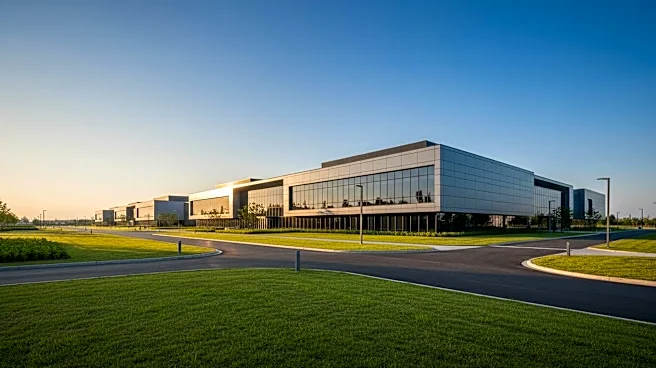
Riot Platforms, a Bitcoin mining company operating in the United States, has secured a senior secured delayed draw term loan facility of up to US$573 million through its subsidiary, Riot DC Logistics. This significant financing is earmarked to support
a 191 MW data center expansion at its Rockdale facility. The company's shares have seen a year-to-date increase of 41.53% and a 1-year total shareholder return of 62.66%, indicating a recent surge in momentum despite an 11.50% decline over the past 90 days. This move is part of Riot's strategy to aggressively build out a scalable data center business, leveraging its extensive power capacity in high-demand regions. The company aims to capitalize on the increasing demand for AI and cloud computing infrastructure, which is expected to drive higher revenue and an improved valuation multiple over time.
Why It's Important?
This substantial loan facility is crucial for Riot Platforms as it positions the company to significantly expand its data center capabilities, directly addressing the growing demand for AI and cloud computing infrastructure in the U.S. The expansion at Rockdale could solidify Riot's role beyond just Bitcoin mining, transforming it into a key player in the broader data center market. For investors, the mixed sentiment surrounding Riot Platforms highlights the inherent risks and potential rewards. While the aggressive build-out suggests future growth and an improved valuation, concerns remain regarding the company's profitability and the potential impact of fluctuating Bitcoin prices on its mining economics. The valuation gap, with a modeled fair value of $29.50 against a current trading price of $20.04, suggests a potential upside, but the high Price-to-Sales (P/S) ratio of 11.1x compared to the US Software industry average of 3.8x indicates significant valuation risk if market sentiment shifts. This situation underscores the speculative nature of investments in companies bridging cryptocurrency and AI infrastructure.
What's Next?
Riot Platforms will proceed with the 191 MW data center expansion at its Rockdale facility, utilizing the newly secured loan. The success of this expansion will largely depend on the company's ability to effectively lease out the new data center capacity and the continued growth in demand for AI and cloud computing infrastructure. Investors will closely monitor the company's financial performance, particularly its revenue growth and efforts to achieve profitability, as well as the stability of Bitcoin prices, which directly impact its mining operations. The market will also be watching for any shifts in sentiment that could affect the company's valuation, especially given its high P/S ratio compared to industry averages. Future updates on the data center's operational status and leasing agreements will be critical in determining the long-term impact of this expansion on Riot Platforms' market position and financial health.
Beyond the Headlines
The strategic pivot by Riot Platforms to expand its data center business beyond pure Bitcoin mining reflects a broader trend in the U.S. technology sector, where companies are diversifying their operations to capitalize on the booming demand for AI and cloud computing. This move highlights the increasing convergence of cryptocurrency infrastructure with general-purpose data center services. Ethically, the environmental impact of large-scale data centers and Bitcoin mining remains a point of contention, particularly concerning energy consumption. Riot's ability to leverage its 'extensive, readily available power capacity' suggests a focus on energy efficiency or access to cheaper power, which could be a competitive advantage. Legally, the regulatory landscape for both cryptocurrency and data center operations is evolving, and future policy changes could impact Riot's business model. Culturally, the narrative around Bitcoin mining is shifting from a niche, energy-intensive activity to a more integrated component of the digital infrastructure, especially as companies like Riot seek to serve broader technological needs.