
What's Happening?
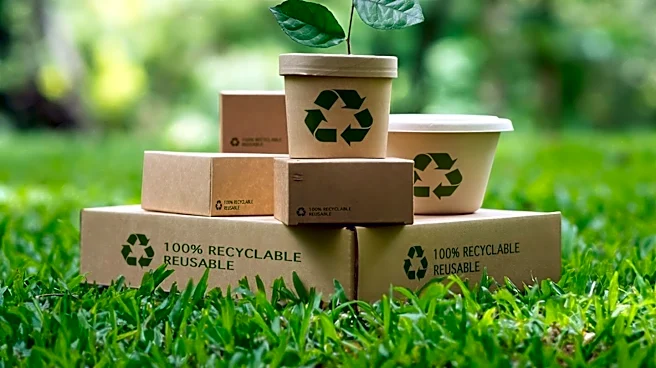
E-commerce businesses are being encouraged to implement practical and straightforward strategies to make their packaging more sustainable. The recommendations focus on several key areas: right-sizing packaging to reduce
waste and void fill, prioritizing recycled content—especially post-consumer recycled (PCR) content—and ensuring recyclability is genuinely accessible to customers. The guidance also suggests using recycled paper packaging as an alternative to plastic when appropriate and utilizing recycled-content plastic to minimize reliance on new plastic. Furthermore, businesses are advised to ask specific sustainability questions to their packaging suppliers to differentiate meaningful improvements from vague environmental claims. This approach aims to simplify the transition to more sustainable packaging without requiring extensive redesigns or complex material strategies.
Why It's Important?
The adoption of sustainable e-commerce packaging is critical for U.S. businesses due to increasing consumer demand for environmentally friendly products and practices. By right-sizing packaging and using recycled content, companies can significantly reduce waste and their environmental footprint, which can enhance brand reputation and customer loyalty. Prioritizing PCR content is particularly important as it creates demand for materials already in the recycling system, contributing to a circular economy. This shift can also lead to cost savings through reduced material usage and potentially lower waste disposal fees. For consumers, easily recyclable packaging simplifies their role in the recycling process, fostering greater participation and positive brand perception. Businesses that fail to adapt may face competitive disadvantages and scrutiny from environmentally conscious consumers.
What's Next?
E-commerce businesses are expected to increasingly integrate these sustainable packaging practices into their operations. This will likely involve closer collaboration with packaging suppliers to source materials with higher recycled content and to develop more efficient packaging designs. The emphasis on asking specific questions to suppliers suggests a trend towards greater transparency and accountability in the supply chain. As consumer awareness and regulatory pressures grow, more businesses may invest in research and development to find innovative, sustainable packaging solutions. The industry could also see the development of clearer standards and certifications for sustainable packaging to help businesses and consumers make informed choices.
Beyond the Headlines
The push for sustainable e-commerce packaging reflects a broader societal shift towards circular economy principles, where waste is minimized, and resources are kept in use for as long as possible. This movement challenges traditional linear consumption models and encourages businesses to consider the entire lifecycle of their products, including packaging. The focus on PCR content highlights the importance of robust recycling infrastructure and consumer participation in making these systems effective. Furthermore, the need for businesses to scrutinize supplier claims points to a growing demand for genuine environmental impact rather than 'greenwashing.' This trend could lead to a more transparent and accountable supply chain, fostering greater trust between businesses and consumers and driving systemic change in how goods are produced, packaged, and consumed.